- Location
- Wisconsin
- Current protection
- Apostle Islands National Lakeshore, Gaylord Nelson Wilderness, Red Cliff and Bad River Reservations (adjacent)
- Status
- Cleared House committee; awaiting a floor vote
- In the book
- Not featured in Undiscovered America
Why should it be a National Park?
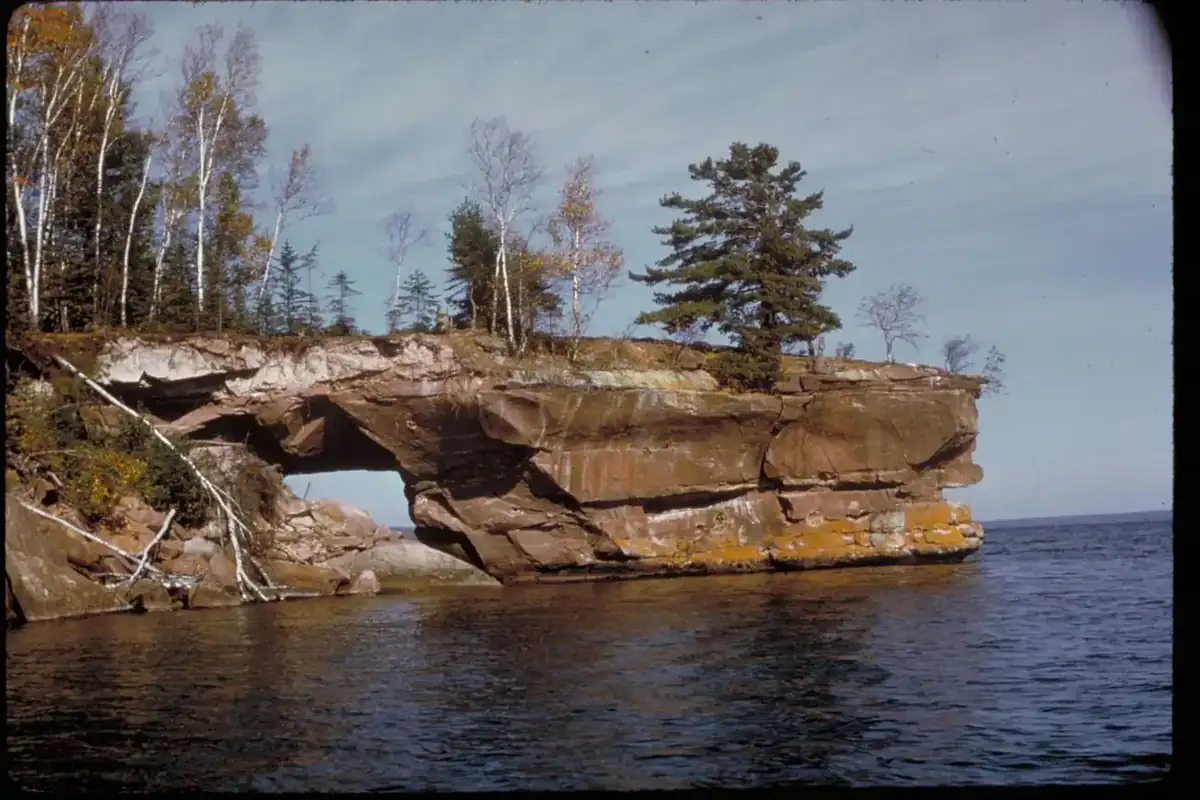
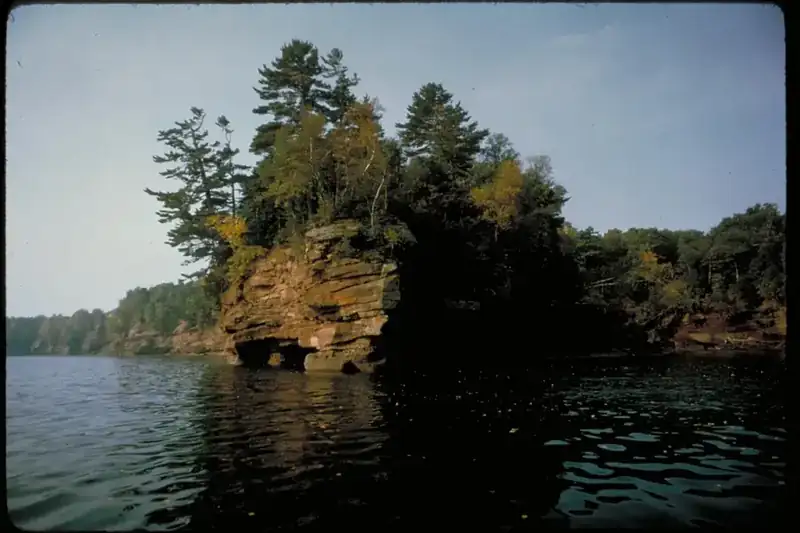
Twenty-one islands sit off the northern tip of Wisconsin in Lake Superior, close enough to reach by kayak and far enough that most Americans have never heard of them. The Apostle Islands are made of red sandstone, and the lake has spent ten thousand years carving that sandstone into arches, chambers, and sea caves that run back into the cliffs. In summer visitors paddle into them. In a hard winter, when the lake freezes solid, people walk across miles of ice to reach caves hung with columns of frozen spray, lit blue from the inside.
No other unit of the National Park System has more lighthouses. Nine light stations stand on these islands, built to guide ore boats and lumber schooners through water that has wrecked hundreds of ships. Before any of that, and still today, this was Ojibwe country. The Red Cliff and Bad River Bands of Lake Superior Chippewa hold treaty rights across these waters, and Madeline Island, the largest of the group and the one island left outside the lakeshore, remains the spiritual center of the Ojibwe people.
The islands were logged, quarried, and farmed before they were protected, and the recovery is part of what makes them worth seeing. Old-growth remnants survive on Outer and Devils Islands. Black bears swim the channels between islands. More than 240 bird species pass through. Congress designated roughly eighty percent of the land as the Gaylord Nelson Wilderness in 2004, named for the Wisconsin senator who fought for the lakeshore and later founded Earth Day.
Wisconsin has no National Park. A bill to make the Apostle Islands the state's first cleared the House Natural Resources Committee in February 2026, and it would change nothing on the ground: same boundaries, same federal ownership, same hunting on Sand Island, which the bill sets aside as a preserve. That is also the objection. The Red Cliff Band and the city of Bayfield have opposed it, arguing the consultation was inadequate and that a new name mainly brings more visitors to a place already straining under them. Whether a designation that changes no acreage is worth the crowds it invites is the question the Apostle Islands now puts to the country.
The history of National Park Campaigns
The 21-island Lake Superior archipelago has been a national lakeshore since 1970 and was first floated as a National Park in 1930 (H.R. 8763). Rep. Tom Tiffany's Apostle Islands National Park and Preserve Act would make it Wisconsin's first National Park, with Sand Island designated a preserve to keep hunting. It cleared the House Natural Resources Committee 20-17 on February 11, 2026, over opposition from the Red Cliff Band of Lake Superior Chippewa and the City of Bayfield.
- Distinct National Park attempts
- 2 (1930; 2024–26)
- Other designation attempts
- 1 (national lakeshore 1970; wilderness 2004)
Sources
- House Natural Resources Committee records, H.R. 5497 (119th Congress)
- Rep. Tom Tiffany press release, February 11, 2026
- Red Cliff Band of Lake Superior Chippewa and Bayfield City Council statements
- Wisconsin Public Radio and Ashland Daily Press coverage, 2024–2026
- 1930
H.R. 8763, the first bill proposing National Park status for the Apostle Islands; not enacted.
- September 26, 1970
Apostle Islands National Lakeshore established (P.L. 91-424), 21 islands plus a mainland unit; 69,000+ acres of land and water.
- 2004
Gaylord Nelson Wilderness designated, roughly 80% of the lakeshore's land area.
- July 2024
Rep. Tom Tiffany (R-WI) introduces the first Apostle Islands National Park and Preserve Act.
- 2025
Reintroduced in the 119th Congress as H.R. 5497; Sand Island designated a preserve so hunting continues; no boundary or ownership change.
- February 11, 2026
House Natural Resources Committee advances H.R. 5497 by a 20-17 vote. Red Cliff Band and City of Bayfield opposed, citing treaty rights, consultation, housing, and infrastructure.