- Location
- Florida
- Current protection
- St. Marks and Lower Suwannee national wildlife refuges, the Big Bend Seagrasses Aquatic Preserve, and state lands
- Status
- Advocacy by the New National Parks campaign; no bill
- Tier
- Tier 1 · National Park
- In the book
- Not featured in Undiscovered America
Why should it be a National Park?
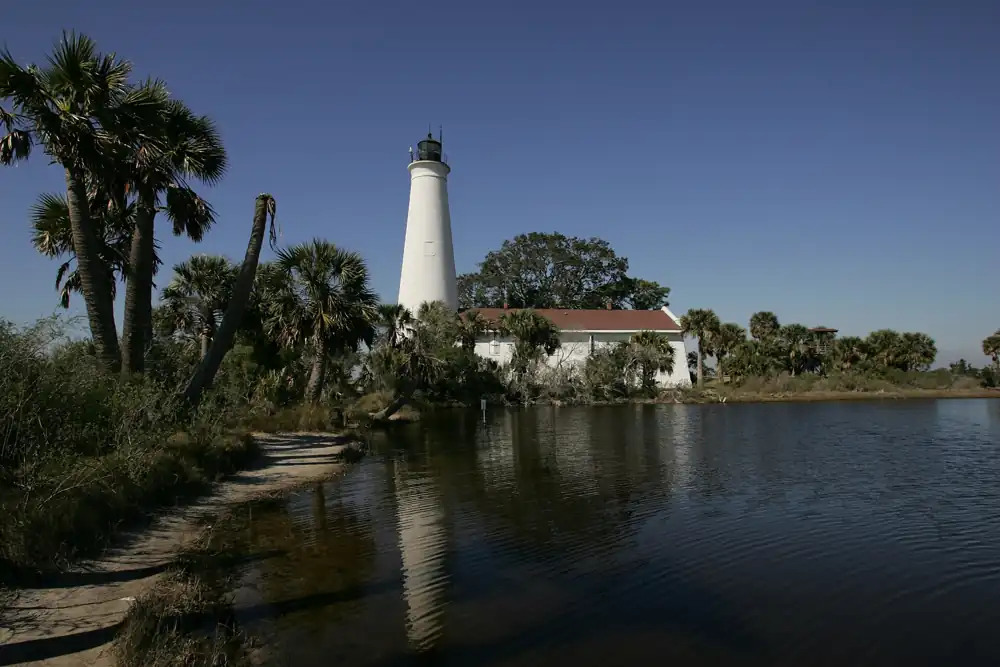
Where the Florida peninsula curves into the Panhandle, the Gulf coast has no beaches and almost no towns: just salt marsh, tidal creeks, spring-fed rivers, and some of the largest seagrass meadows in the Gulf of Mexico, home to manatees, scallops, and sea turtles.
It is one of the last wild coasts in the East and one of the least known. A 1.9-million-acre park here would protect the forests, springs, rivers, and marine meadows together, within reach of twelve million Floridians.
The history of National Park Campaigns
Pieces of the Big Bend coast have been protected since St. Marks National Wildlife Refuge was set aside in 1931, and the state created the Big Bend Seagrasses Aquatic Preserve in 1985. In 2021 the New National Parks campaign proposed a 1.9-million-acre Florida Big Bend National Park.
- Distinct National Park attempts
- 1 (2021 New National Parks campaign proposal)
- Other designation attempts
- 3 (refuges; aquatic preserve)
Sources
- Michael Kellett, "A Modest Proposal: We Need More National Parks," Sierra (August 17, 2021)
- 1931
St. Marks National Wildlife Refuge is established.
- 1979
Lower Suwannee National Wildlife Refuge is established.
- 1985
Florida creates the Big Bend Seagrasses Aquatic Preserve.
- August 17, 2021
The New National Parks campaign proposes a 1.9-million-acre Florida Big Bend National Park.