- Location
- Florida
- Current protection
- Guana Tolomato Matanzas National Estuarine Research Reserve, Guana River Wildlife Management Area, Guana River Marsh Aquatic Preserve
- Status
- No active campaign
- In the book
- Not featured in Undiscovered America
Why should it be a National Park?
Between St. Augustine and Ponte Vedra Beach, on a barrier peninsula the Atlantic is steadily working at, lies one of the last undeveloped stretches of the northeast Florida coast. The Guana River runs behind the dunes through salt marsh and tidal creek, and behind that is maritime hammock, pine flatwoods, and scrub. It is roughly seventy-six thousand acres of estuary between two of the fastest-growing counties in the state.
People have lived on it for four thousand years. Shell middens along the marsh mark Timucua settlements. The Spanish ran a plantation here in the 1700s and built a dam across the river to manage water for it, and the dam is still in place. Fort Matanzas, at the southern end of the estuary, guards the inlet where Pedro Menéndez killed several hundred shipwrecked French Huguenots in 1565, an event that decided who would hold Florida.
Right whales calve off this coast in winter, the only known calving ground for a species down to a few hundred animals. Loggerhead and green turtles nest on the beach. The estuary is a nursery for most of the fish the region's boats catch.
In 1973 a Florida congressman introduced a bill to make it Guana River National Park. It died in committee and nothing federal has been attempted since. The state bought the land in 1984, and in 1999 it became part of a national estuarine research reserve, which is a real designation with a research mandate and very little public profile. That low profile nearly cost it. In 2025 a developer proposed swapping out six hundred acres of the wildlife management area, and only a loud county-level fight stopped it. A place that was once proposed as a National Park had to be rescued from a land swap fifty years later, and most Floridians have never heard of it.
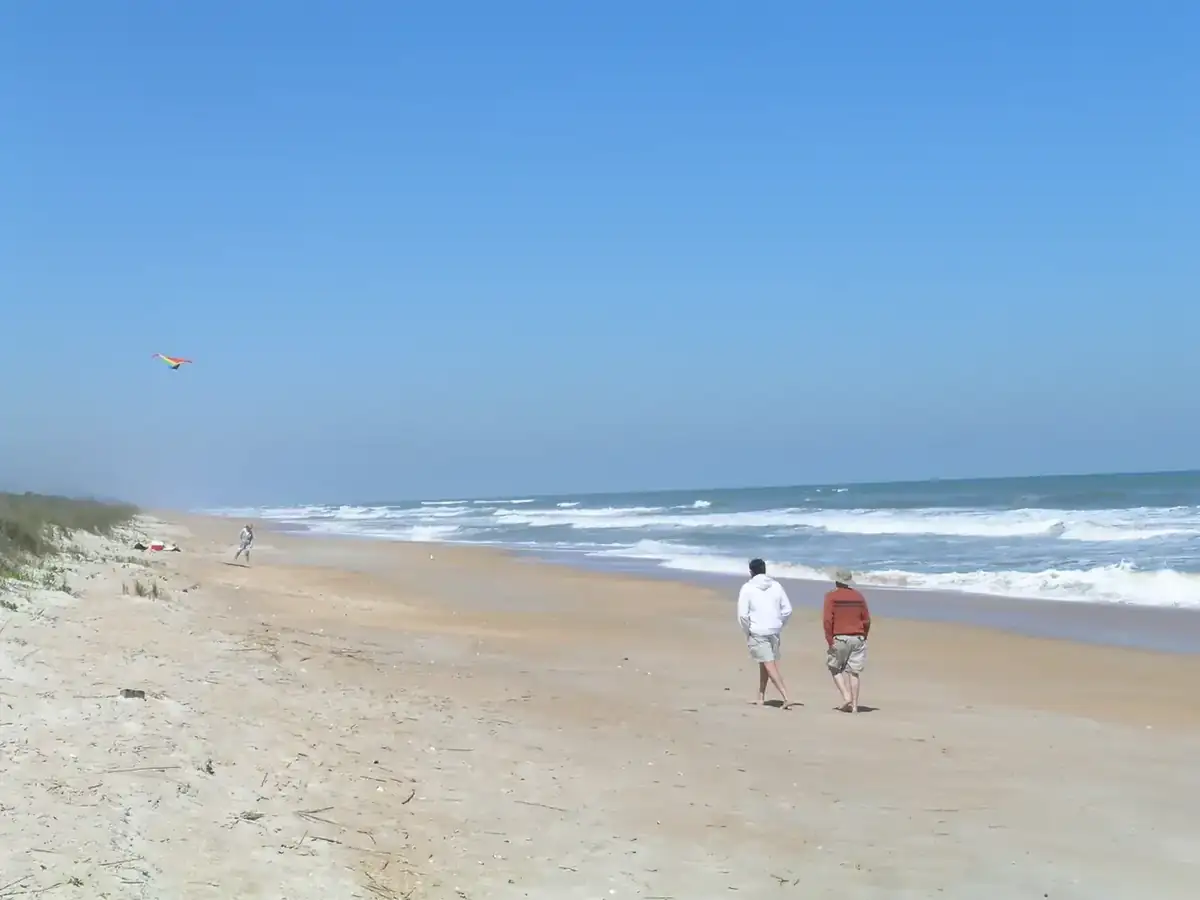
Nine miles of beach here have nothing built on them, which on the northeast Florida coast is close to unrepeatable. Behind the dune the land runs through maritime hammock to salt marsh and then to the Tolomato, and the whole estuary, some seventy-six thousand acres of it, is managed as a research reserve, which means much of what is known about this coastline is known because it was measured here.
Historians have argued for a century about where Ponce de Leon came ashore in 1513, and this stretch of coast is one of the places they argue for. What is not in dispute is the four thousand years of Timucua settlement recorded in the shell middens along the marsh, or the Spanish plantation era that followed, or the dam the state rebuilt in the 1950s to make the impoundment that now draws the waterfowl.
The pressure is the point. St. Johns County is one of the fastest growing places in the country, the subdivisions have reached both ends of the reserve, and the fight in 2025 over swapping six hundred acres of the wildlife management area showed how quickly protected ground here can come back into play. A federal designation is one of the few things that would take that question off the table permanently.
The history of National Park Campaigns
Rep. William Chappell Jr. introduced H.R. 383 in 1973 to create a Guana River National Park in northeast Florida; it died in committee. The land is now the Guana Tolomato Matanzas National Estuarine Research Reserve, designated in 1999 under NOAA's reserve system and administered by Florida, incorporating the former Guana River State Park and the state-managed wildlife management area. A 2025–26 land-swap controversy revived attention after a developer sought roughly 600 acres and withdrew amid opposition.
- Distinct National Park attempts
- 1 (1973)
- Other designation attempts
- 3 (state park; estuarine research reserve 1999; aquatic preserve)
Sources
- H.R. 383, 93rd Congress (1973) — bill text and committee status UNVERIFIED
- NOAA National Estuarine Research Reserve System records
- Florida Department of Environmental Protection GTM Reserve management plan
- 1973
Rep. William Chappell Jr. (D-FL) introduces H.R. 383 (93rd Congress) to create a Guana River National Park; it dies in committee.
- 1984
State land purchase under the Conservation and Recreation Lands program.
- August 19, 1999
Guana Tolomato Matanzas National Estuarine Research Reserve designated under NOAA's reserve system.
- 2004
The former Guana River State Park is absorbed into the reserve.
- 2025–2026
A proposed land swap of roughly 600 acres of the wildlife management area is withdrawn after county and community opposition; a Florida transparency bill follows.