- Location
- Oklahoma
- Current protection
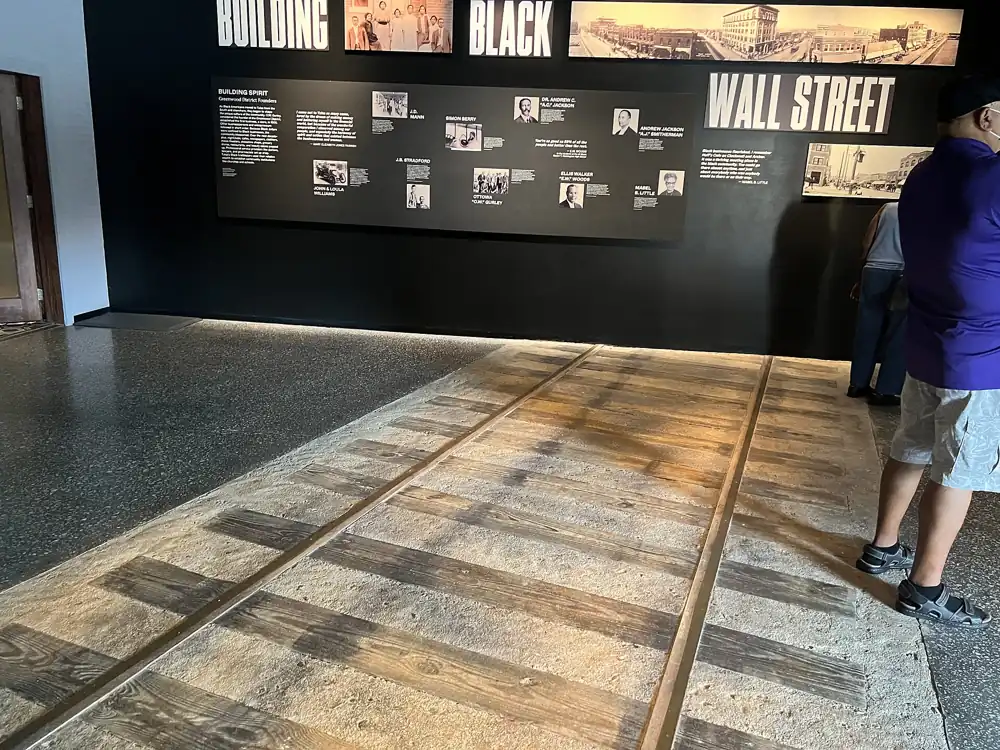
- Historic district in Tulsa, including Greenwood Rising and Vernon AME Church
- Status
- Bill in Congress for a Park Service monument
- Tier
- Tier 3 · Smaller national site
- In the book
- Not featured in Undiscovered America
Why should it be a National Park?
Greenwood was one of the most prosperous Black communities in America, a neighborhood of shops, theaters, churches, and professional offices so successful it was called Black Wall Street. On May 31 and June 1, 1921, a white mob burned it to the ground, killing hundreds of residents and leaving thousands homeless.
The Park System protects the places where the country's history happened, the painful places included. Greenwood belongs among them.
The history of National Park Campaigns
The Historic Greenwood–Black Wall Street Coalition, a group of more than a dozen Tulsa organizations, has pushed for years for a national monument in the Park System. Sen. James Lankford and Sen. Cory Booker introduced the bill in 2023; it passed the Senate in December 2024 and died in the House. It was reintroduced in the 119th Congress.
- Distinct National Park attempts
- 2 (S. 3543, 2023–24; S. 1051, 2025)
- Other designation attempts
- 0
Sources
- S. 3543, Historic Greenwood District–Black Wall Street National Monument Establishment Act (118th Congress)
- S. 1051 (119th Congress)
- News 9, "Bill To Establish Black Wall Street Monument Closer To Becoming Law" (2024)
- May 31–June 1, 1921
The Tulsa Race Massacre destroys the Greenwood District.
- June 1, 2021
President Biden visits Tulsa for the centennial; the Greenwood Rising history center opens.
- December 14, 2023
Sens. James Lankford and Cory Booker introduce S. 3543 to establish the Historic Greenwood District–Black Wall Street National Monument as a unit of the National Park System.
- November 2024
The Senate Energy and Natural Resources Committee advances the bill.
- December 17, 2024
The Senate passes S. 3543; the House does not act.
- 2025
The bill is reintroduced in the 119th Congress as S. 1051.