- Location
- Nebraska
- Current protection
- Samuel R. McKelvie National Forest, Nebraska National Forest, Valentine
- Status
- No active campaign
- In the book
- Featured in Undiscovered America
Why should it be a National Park?
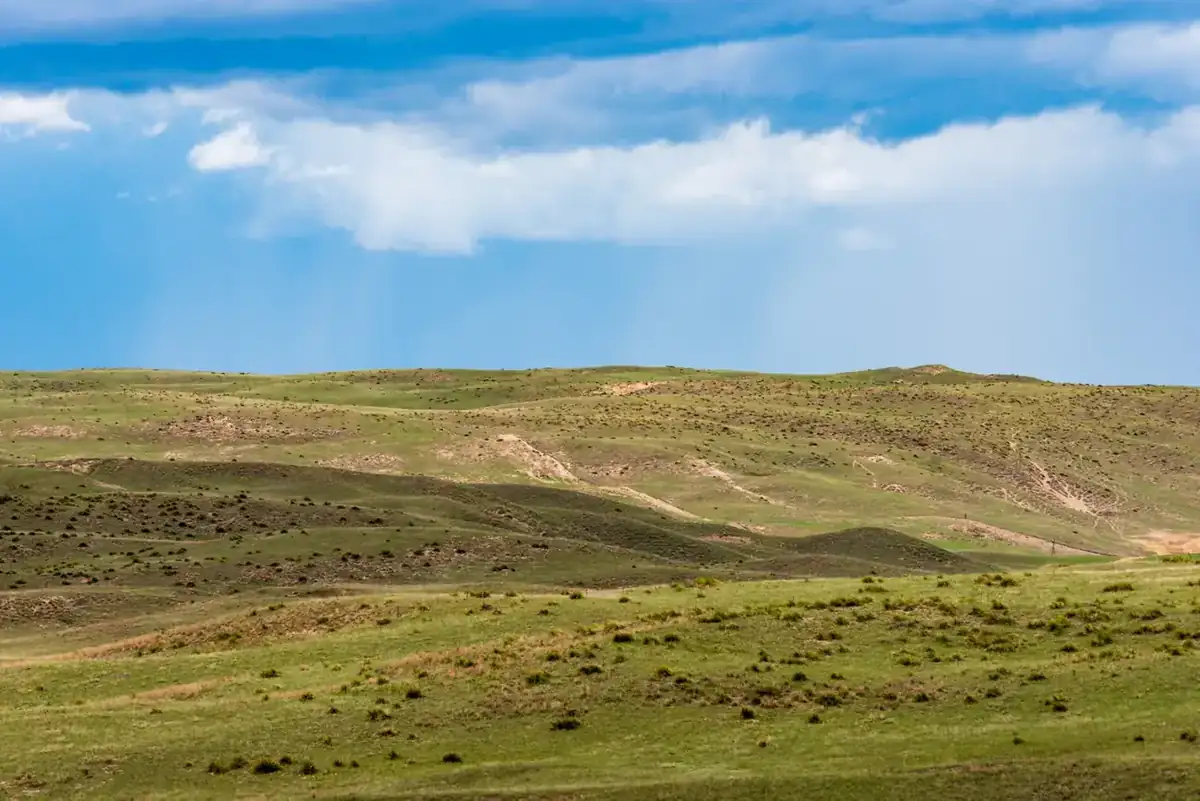
The area between the Rocky and Appalachian Mountains goes by many names, including the great plains, Midwest, prairie, or the fly-over states. The often maligned region is perceived as an expanse of cornfields and open grassland where nothing worthwhile exists for the nature-minded traveler. While it is true, the Midwest lacks the towering scale of a Yosemite or Great Smoky Mountains, there are grand natural settings to be found if you know where to look.
The sandhills of western Nebraska are one of the largest unknown, uncultivated, and unprotected areas of the country. They make up a quarter of all the land in Nebraska, a staggering 19,600-square-miles. Their total size is actually greater than that of nine states. The sandhills do not have the vertical grandeur that most people associate with our iconic natural wonders, but this landscape has a similar scale to the Everglades. This immense environment deserves our attention and admiration.
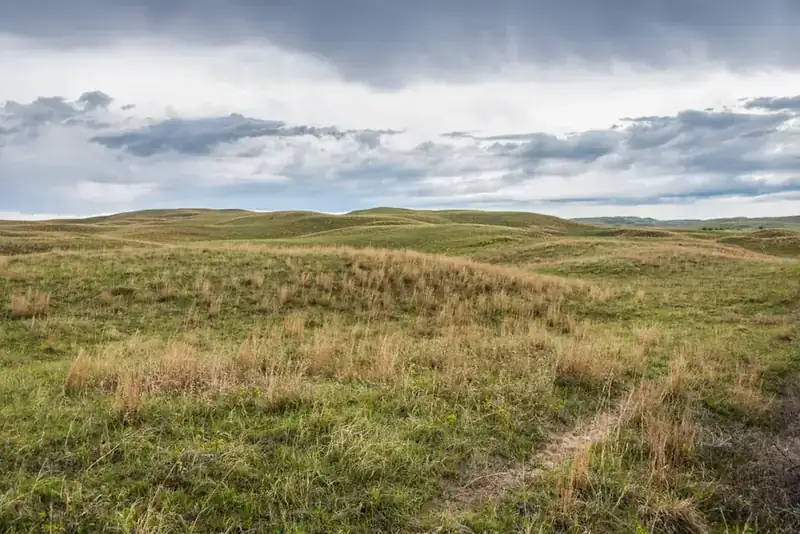
To understand their appearance and size, picture the flowing sand dunes covering the Sahara Desert, now cover those dunes with a layer of prairie grass, and you have a general idea of the sandhills. Instead of waves of shifting sands, the landscape is an enormous series of yellow and green mounds that extend to every horizon. Like the nearby Badlands of South Dakota, this stretch of land was bypassed by settlers moving west, because it offered very little in the way of resources besides scenic beauty. Because of this avoidance, the bulk of the sandhills remain unaltered by humans.
As much as 85 percent of the land remains in its original state. From the mid-1800s through the early 1900s, the government gave incentives for homesteaders to move west. People who braved settling atop these sandy landforms received up to 640 acres of land. However, these pioneers quickly learned that the sandhills were inhospitable to farming and cultivation. While some small towns popped up throughout the region, most of the homesteaders continued west.
Currently, only a tiny percentage of land has federal or state protection to conserve this impressive and ignored landscape, including Valentine, Crescent Lake, and Fort Niobrara National Wildlife Refuges, as well as sections of Samuel R. McKelvie and Nebraska National Forests. However, all of these areas combined results in the conservation of fewer than 400-square-miles, or roughly 2% of this forgotten landscape.
During the 1960s, a Sandhills National Parkway was considered for this region. The idea of making a National Park in this region has been made by individuals such as high school biology teacher James P. Jackson, but nothing approaching a serious campaign has ever emerged.
The history of National Park Campaigns
The Sandhills' only concrete federal "park-family" proposal was a scenic parkway, not a park; the Niobrara corridor absorbed the region's park energy and became a scenic river. The private ranch economy — not the park process — preserved the grassland.
- Distinct National Park attempts
- 0 clearly documented (the 1961–63 NPS prairie search and 2020 essay are the closest)
- Other designation attempts
- 2 (1965 Sandhills National Parkway concept; 1991 Niobrara National Scenic River)
Sources
- NPS online book, Tallgrass Prairie National Preserve administrative history, ch. 3
- NPS Occasional Paper No. 7 (prairie identification)
- NPS Niobrara River Management Plan (2011)
- NPS 1965 Prairie–Great Plains Tourway study (RG 79)
- 1902 / 1908
Nebraska National Forest (Bessey division 1902; Niobrara division 1908, later Samuel R. McKelvie NF, 1971).
- 1912
Fort Niobrara NWR (19,131 acres).
- 1931 / 1935
Crescent Lake NWR; Valentine NWR.
- 1961–1963
NPS prairie-park search (considered Kansas and Nebraska sites) — part of the effort that ultimately produced Tallgrass Prairie designations elsewhere. (NPS online book, Tallgrass Prairie.)
- 1965
The NPS "Prairie–Great Plains Tourway" plan (a 1,400-mile route Oklahoma-to-Montana) proposes a 100-mile "Sandhills National Parkway" through central-northern Nebraska as one of three "National Parkway" segments (with the Great Prairie Parkway in the Flint Hills and a Sioux-Badlands Parkway). Never built. (NPS parkhistory online book, tapr_3.) The route survives as the Sandhills Journey Scenic Byway (NE-2).
- 1980
The Nature Conservancy's Niobrara Valley Preserve established.
- 1970s–1980s
Norden Dam fight; the 1980s NPS Niobrara study of alternatives leads to the scenic river rather than a park.
- May 24, 1991
Niobrara National Scenic River authorized (76 miles; ~29,101 acres of interest), championed by Sen. J.J. Exon and Rep. Doug Bereuter.
- 2020
A National Parks Traveler essay proposes a "Great Plains National Park" / Niobrara. UNVERIFIED author.
The book's citation of biology teacher James P. Jackson's National Park editorial remains UNVERIFIED [Round 7: still not found; check NEBRASKAland magazine archives and Nebraska newspaper databases].