- Location
- Nebraska
- Current protection
- Mostly private land, adjoining the Santee Sioux Reservation
- Status
- No active campaign
- Tier
- Tier 3 · Smaller national site
- In the book
- Not featured in Undiscovered America
Why should it be a National Park?
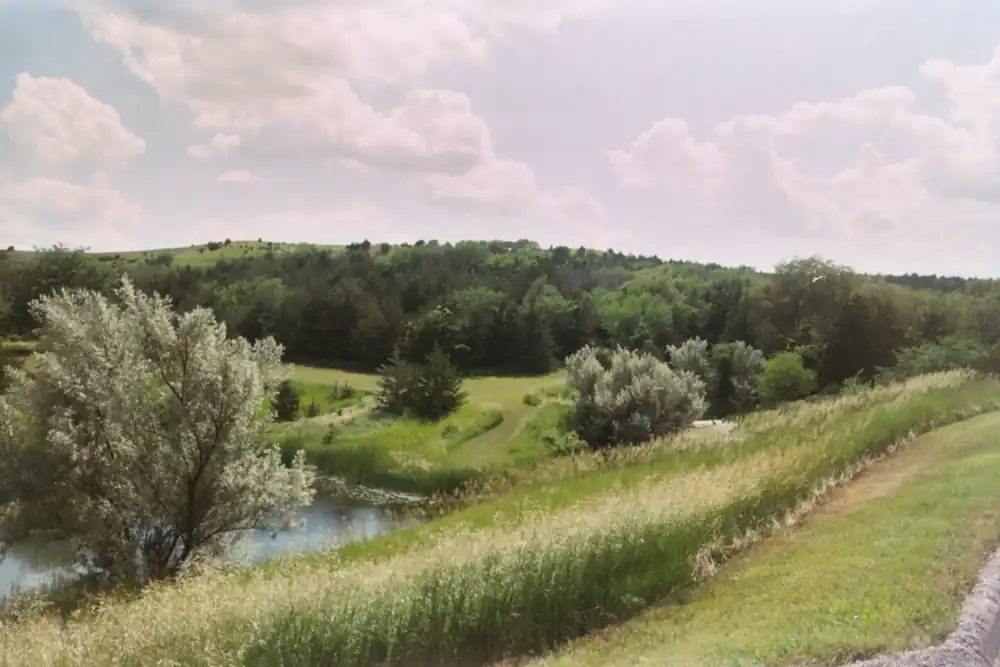
In Knox County, the land breaks into a maze of wooded ravines and chalk bluffs above the Missouri River, country the pioneers called the Devil's Nest and where outlaw legends still hang on. It overlooks what is now Lewis and Clark Lake.
The Nebraska House asked Washington to make it a National Park, and a Park Service inspector found it worth protecting. It remains one of the least known landscapes on the Missouri.
The history of National Park Campaigns
In 1935, the Nebraska House passed a resolution asking the federal government to preserve the Devil's Nest as a National Park, and South Dakota's legislature backed it. A Park Service inspection that March found considerable recreational value. A local association in Crofton pressed the case until 1938, when the Service offered a Civilian Conservation Corps camp to help develop a state park if Nebraska bought the land.
- Distinct National Park attempts
- 1 (1935–38)
- Other designation attempts
- 1 (1938 state park offer)
Sources
- National Park Service, Suggested Areas Resumes (1957)
- Wikipedia, List of proposed National Parks of the United States
- 1935
The Nebraska House resolves that the Devil's Nest be preserved as a National Park; Rep. Karl Stefan forwards it, and Sen. Peter Norbeck reports a supporting South Dakota resolution.
- March 1935
A Park Service inspection finds the area of considerable recreational value.
- 1935–1938
The Devil's Nest National Park and Game Preserve Association of Crofton presses the case.
- 1938
The Service offers a CCC camp to help develop a state park if Nebraska acquires the land.