- Location
- Utah/Colorado
- Current protection
- Dinosaur National Monument
- Status
- Recurring discussion, no bill
- In the book
- Featured in Undiscovered America
Why should it be a National Park?
There are few places better named than Dinosaur National Monument. This area, which straddles the border of northeastern Utah and northwestern Colorado, is called Dinosaur because of the extensive fossils and geology on display. Twenty-three naturally occurring rock layers are exposed and allow visitors to view remnants of extinct ecosystems spanning 1.2 billion years. Visitors can see evidence of ancient seas and plains where dinosaurs roamed as well as Sahara-like deserts that were home to early mammals. Of the 22 currently recognized geologic periods, 19 are represented in Dinosaur.
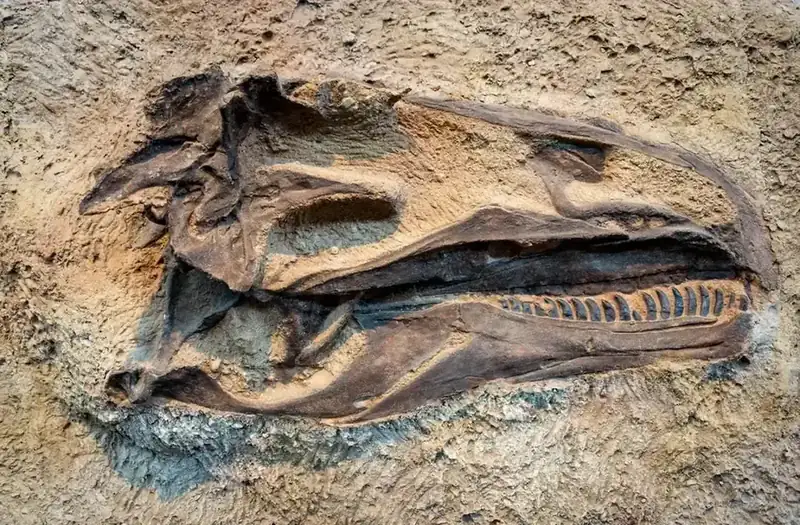
One of the most prominent and fascinating aspects of Dinosaur is the Carnegie Quarry, or as it may be better known, "the wall of bones". The impressive 150 feet stone wall of fossilized remains was protected in 1957 when the Dinosaur Quarry Exhibit Hall building was built overtop of the site. The bones are situated as they were found in a stunning, slanted rock face showcasing roughly 1,500 preserved remains that include Allosaurus, Apatosaurus, Stegosaurus, and other well-known dinosaurs. A viewing platform allows close-up examination, just like the paleontologists who discovered them.
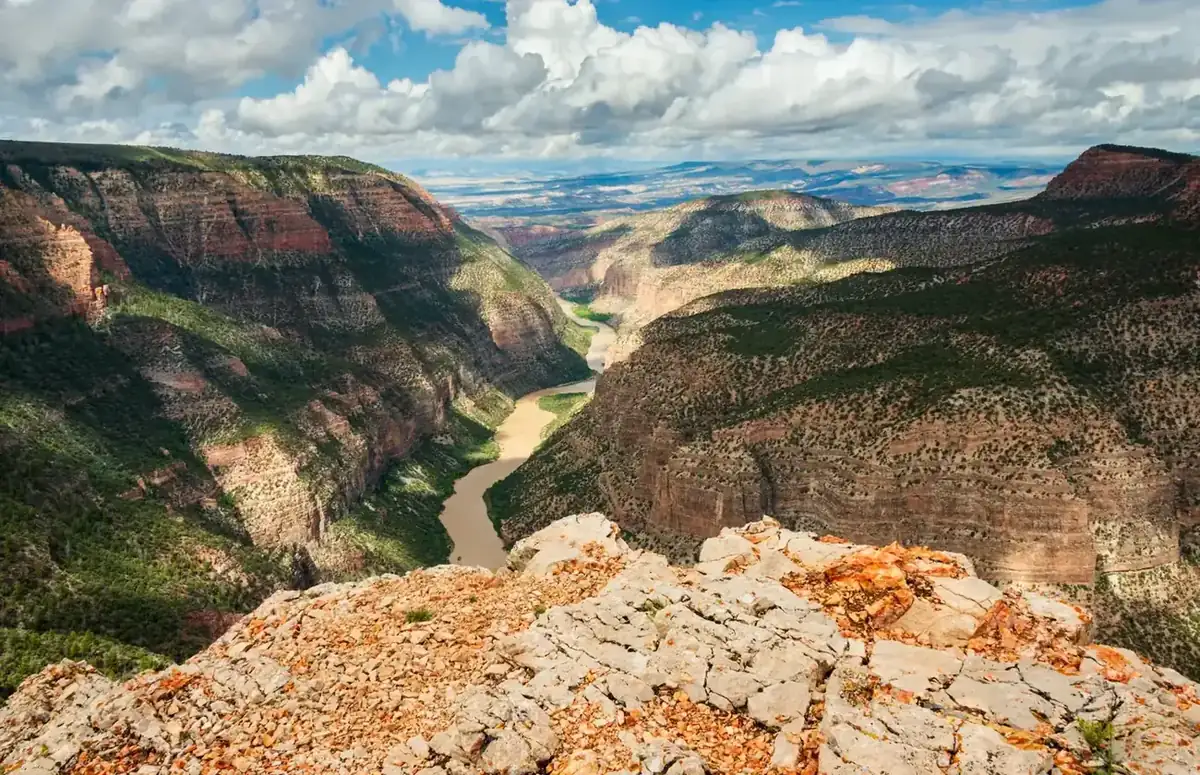
In addition to fossils, the natural setting is quite astounding. The Green and Yampa Rivers flow through the monument and cut massive river canyons. The waters that flow through are frequented by rafters and day-trippers, while the trails and overlooks offer a different but equally impressive experience. Depending on what type of experience visitors want, there are entrances to sections of the monument in Utah and Colorado, with the western sections offering more of an intimate and historical perspective and the eastern focusing more on exploring and vast landscapes.
The Dinosaur region is currently a national monument run by the NPS, but several times over the last century attempts were made to redesignate the monument as a National Park. If you think of the iconic national monuments, they are all singular sites with limited land. Devils Tower, Muir Woods, the Statue of Liberty, and Ellis Island are great examples of places that are important either ecologically or historically, but consist of one main attraction that does not envelop the landscape. In contrast, National Parks typically secure massive environments that offer sweeping vistas or protect endangered ecosystems, if not both. With this knowledge, it's hard to imagine why Dinosaur is a monument and not a park. Dinosaur is incredibly diverse and has significantly more land than dozens of National Parks. Dinosaur has the national monument designation because the Antiquities Act of 1906 gives the President sole power to create national monuments. National Parks require Congressional approval. Due to this act, some of our most beloved parks began as national monuments before being redesignated. Dinosaur has been increased in size since its creation in 1915, but despite occasional murmurs about changing its federal label to a National Park, it has not yet achieved this status. As the monument is bisected by the Utah/Colorado border, changing its designation would involve actions from members of each state in Congress.
Dinosaur has been considered for National Park redesignation on several occasions. Former superintendents have vocally supported the idea. Complications arise because the landscape spans Colorado and Utah, meaning both states would have to lend support for the legislation at the same time.
The history of National Park Campaigns
The National Park Service itself drew up a "Proposed Dinosaur National Park" in 1952, at the height of the Echo Park dam fight — the earliest documented park proposal here, now held in the University of Northern Colorado's Dinosaur archive. Later pushes came from Rep. Ben Nighthorse Campbell (1989), the Utah Legislature (1999), and Reps. Chaffetz and Bishop (2015); all foundered on grazing, oil and gas, and Uintah Basin politics.
- Distinct National Park attempts
- 4 documented (1952 NPS proposal; 1989; 1999; 2015) + unconfirmed 1992
- Other designation attempts
- monument 1915; expansion 1938; 1956 statutory dam ban
Sources
- UNCO Dinosaur digital archive (digscholarship.unco.edu/dino) — 1950–52 documents incl. the Proposed Dinosaur National Park map
- NPS Survey of the Recreational Resources of the Colorado River Basin (1950), ch. IX
- Stratton & Sirotkin, The Echo Park Controversy (1959)
- Mark Harvey, A Symbol of Wilderness: Echo Park and the American Conservation Movement (1994)
- Beidleman, Administrative History, Dinosaur National Monument (1963, unpublished, DSC)
- October 4, 1915
Wilson proclaims an 80-acre monument around Earl Douglass's quarry.
- July 14, 1938
Proclamation 2290 (FDR) enlarges the monument to 203,965 acres, taking in the Green and Yampa canyons; 1939 NPS internal memorandum on the expansion. (UNCO Dinosaur archive; nps.gov)
- 1940
G.A. Moskey internal report on Ute hunting rights within the monument.
- 1941
Echo Park dam first proposed; 1942 Nusbaum–Drury correspondence on archeological impacts; 1943 Olmsted "Dinosaur National Monument Region, Report of Progress" (May 13, 1943).
- 1946
Bureau of Reclamation's Colorado River Storage Project plan; 1950 Secretary Chapman approves Echo Park and Split Mountain dams; NPS's Survey of the Recreational Resources of the Colorado River Basin (1950) finds the dams would "materially and deplorably alter" the Canyon Unit; Leo Diederich's 1950 monument master plan; Bernard DeVoto, "Shall We Let Them Ruin Our National Parks?" (Saturday Evening Post, July 22, 1950).
- 1952
PROPOSED DINOSAUR NATIONAL PARK. NPS "Boundary Map of Proposed Dinosaur National Park & Accompanying General Information" (1952) — the Service's own park proposal during the dam controversy. (University of Northern Colorado, digscholarship.unco.edu/dino) VERIFY acreage and whether it reached Congress.
- 1955
Wallace Stegner, ed., This Is Dinosaur (Knopf); April 11, 1956 — Colorado River Storage Project Act bars dams in any National Park or monument; Echo Park dropped, Glen Canyon built instead.
- 1958
Mission 66 quarry visitor center opens, "partly as a result of increased national interest... growing from the publicity inherent to the Echo Park Controversy." (Vernal Express, June 3, 1958)
- 1989
Rep. Ben Nighthorse Campbell (D-CO) backs National Park status. VERIFY bill/statement.
- 1999
Utah House Resolution 6 (Rep. Jackie Biskupski) urges Congress to create Dinosaur National Park. (le.utah.gov)
- 2015
Reps. Jason Chaffetz and Rob Bishop float an upgrade (KSL); stalls over grazing and oil/gas.
- 2023–2026
"recurring talk, no bill." (2026 inventory)