- Location
- Colorado
- Current protection
- Colorado National Monument, McInnis Canyons National Conservation Area, Dominguez–Escalante National Conservation Area
- Status
- No active campaign
- In the book
- Featured in Undiscovered America
Why should it be a National Park?
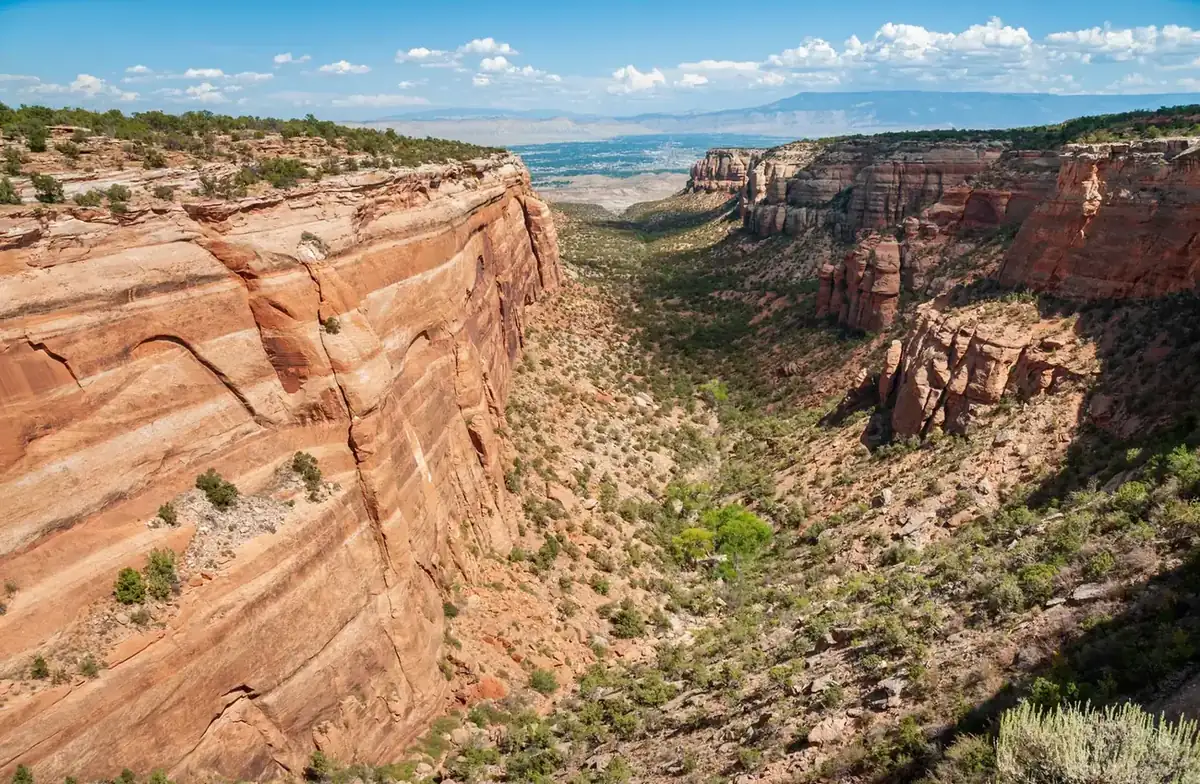
Rim Rock Canyons is the name of the proposed National Park that would be created by redesignating the current Colorado National Monument. Established by presidential proclamation in 1911, the monument preserves a system of sandstone canyons at the edge of a mesa plateau.
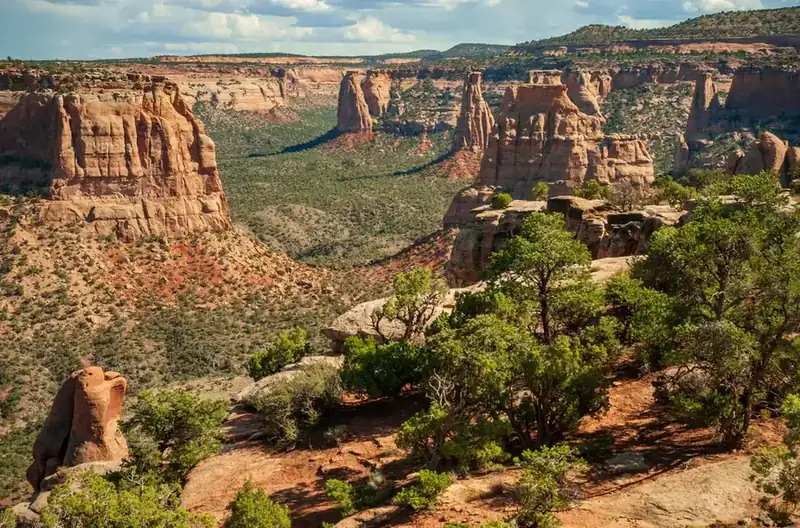
The terrain is a combination of red rock gorges interspaced with red rock buttes. Colorado National Monument preserves a similar setting to Monument Valley, but it displays that iconic landscape would have looked before the isolated buttes separated from the central mesa. Here, it's easy to see how those separated formations originally fit into the larger environment.
A scenic 23 mile drive leads tourists to major sections of the landscape. The road begins at the base of the cliffs and climbs to the rims of the canyons, taking visitors from viewpoint to viewpoint. Trails also leave from this road, making it the easiest way to access different aspects of the monument.
Colorado National Monument lies west of the town of Grand Junction, Colorado near the Utah border. This monument serves as the gateway to many more famous desert parks but is overlooked by most tourists. The famed chain of Zion, Bryce Canyon, Capitol Reef, Canyonlands, and Arches National Parks in southern Utah line up directly with Colorado National Monument, but its different designation and location in a neighboring state means people aren't as aware of it. For this reason, the visitation rates are staggeringly lower to neighboring park areas despite the appearance and grandeur being similar to the Utah parks.
Recently, locals have been trying to raise awareness for their hometown landmark. A committee was formed to push for a National Park redesignation and many local and state politicians got on board. The citizens of Grand Junction are largely for the redesignation from monument to park, but only time will tell if they are successful.
For now, the monument encompasses 20,533 acres of major canyons and formations, but there are many impressive areas beyond the current boundaries which could be included in the future park. The BLM manages two neighboring National Conservation Areas, McInnis Canyon to the northwest and Dominguez-Escalante to the south. Those areas combined provide access to more than 333,000 acres that give a more complete scenic and geological story. Access to these areas is much more difficult and remote, but far more open to exploration than the tour-road based monument.
Colorado National Monument has been on a rollercoaster of support and opposition for National Park redesignation for decades. Most recently in 2014, the monument was considered to become 'Rim Rock Canyons National Park', but opposition doomed the proposal. Still, this remains a perennial favorite for the next park.
The history of National Park Campaigns
John Otto wanted a National Park from the start; Taft gave him a monument in 1911. Redesignation has surfaced repeatedly "during bust cycles" (uranium, then oil and gas), reaching its high-water mark in the 2011–2014 Udall/Tipton effort, which collapsed on divided local opinion rather than any NPS objection.
- Distinct National Park attempts
- 3 (1907; and the sustained 2010–2014 push, plus recurring earlier "bust-cycle" agitation)
- Other designation attempts
- 2 (McInnis Canyons NCA 2000/2004; Dominguez-Escalante NCA 2009)
Sources
- National Parks Traveler, "Muddying the Waters Over Redesignating Colorado National Monument" (Apr. 27, 2014)
- Post Independent, "Push to upgrade Colorado National Monument stalls in Mesa County"
- Coalition of NPS Retirees letter (April 2014)
- Taft Proclamation (1911)
- 1907
First effort toward park status (per Wikipedia; the earliest local push). UNVERIFIED specifics.
- May 24, 1911
President Taft proclaims Colorado National Monument after John Otto's campaign; Otto favored a park.
- 1930s
Rim Rock Drive built by CCC.
- 2000
Colorado Canyons NCA created (renamed McInnis Canyons NCA, 2004).
- 2009
Dominguez-Escalante NCA.
- December 2010–February 2011
Centennial; Grand Junction Visitor & Convention Bureau board chair Paul Petersen writes Sens. Udall and Bennet urging park status; Sen. Mark Udall (D-CO) (chair, Senate National Parks Subcommittee) holds a Feb. 23, 2011 listening session at Mesa State College; Rep. Scott Tipton (R-CO) says the community must drive it. An 18-member local committee is appointed. (CBS Colorado/AP; Bennet press release; Post Independent.)
- June 2013
A five-person executive committee is formed to draft legislation.
- Early 2014
Draft Senate legislation released (proposed name "Rim Rock Canyons National Park"); a controversial provision would have created a "park advisory committee" including a Western Slope Colorado Oil and Gas Association seat, drawing criticism from the Coalition of National Park Service Retirees (letter, April 25, 2014). Documentary filmmaker Ken Burns endorsed park status. Public comment ended June 29, 2014.
- June 2014
Udall and Tipton abandon the effort, citing divided community opinion and fears redesignation could harm the local economy. (Post Independent; E&E News.)
- Post-2014
No successful revival; local op-eds recur but no 2022–2026 bill from Reps. Boebert/Hurd or Sens. Bennet/Hickenlooper was found. UNVERIFIED on any post-2014 formal bill.