- Location
- California
- Current protection
- Santa Monica Mountains National Recreation Area, Verdugo Mountains, Simi Hills
- Status
- Expansion bill in Congress
- In the book
- Not featured in Undiscovered America
Why should it be a National Park?
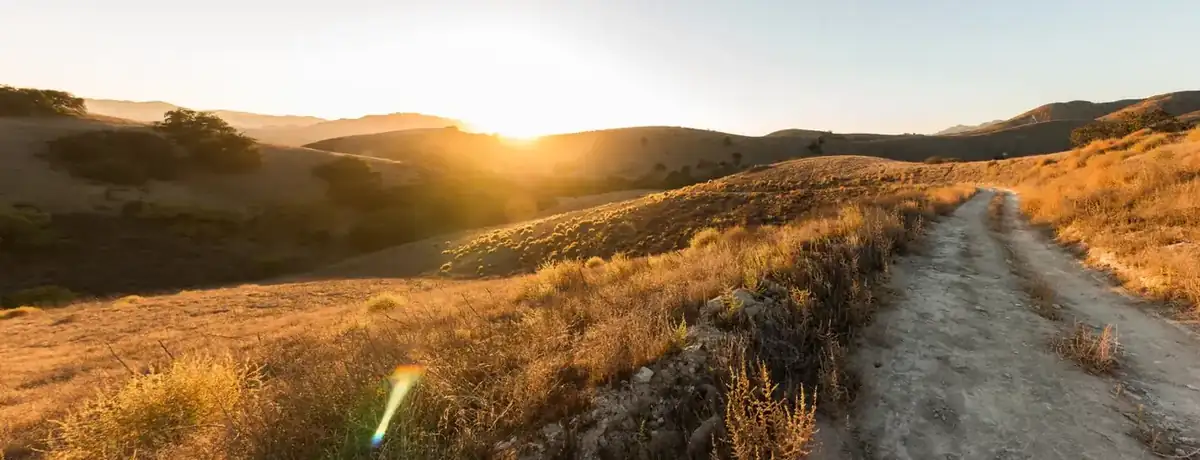
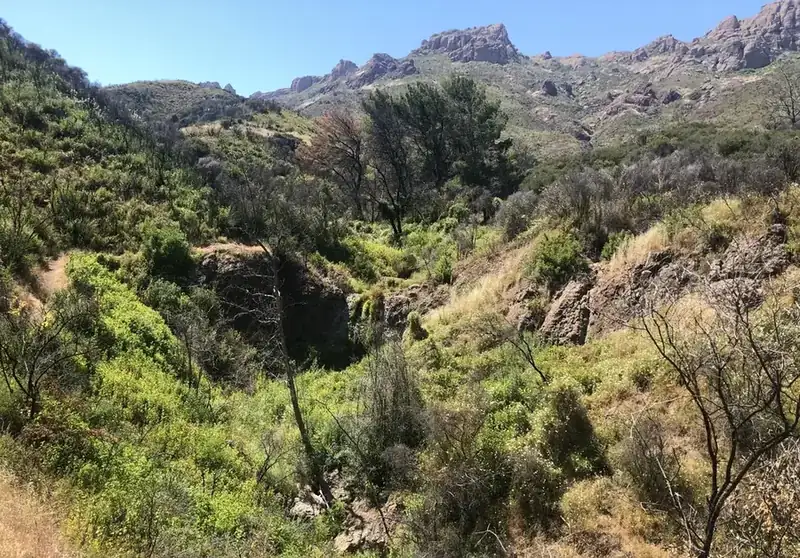
Los Angeles is ringed by mountains, and the remarkable thing is how much of that ring is still empty. The Santa Monicas run to the sea. The Verdugos, the San Rafaels, the Simi Hills, the Santa Susanas, and the front range of the San Gabriels close the circle around the basin. From high ground in any of them you can see ten million people on one side and chaparral on the other.
The Santa Monica Mountains National Recreation Area, created in 1978, protects part of this and is the largest urban National Park unit in the world. But it stops well short of the rim. The rest is a patchwork of county parks, conservancy holdings, city open space, and private land, and it has been disappearing steadily to development for fifty years. The wildlife notices first. The mountain lions of the Santa Monicas have been cut off from the Los Padres and the San Gabriels by freeways, and the inbreeding that follows has been documented animal by animal. The Wallis Annenberg Wildlife Crossing over the 101, completed in the 2020s, is a hundred-million-dollar attempt to reconnect what the roads severed.
The human history in these hills is just as layered. Chumash and Tongva villages, Spanish ranchos, the Rancho Sierra Vista, and the movie ranches of the Santa Susanas where a large share of American westerns were filmed.
Congress authorized a study in 2008, and in 2016 the Park Service recommended adding about 191,000 acres to the recreation area, which would roughly double it. The House has passed the bill more than once. The Senate has never finished. It is not a new park and not a fight over acreage in some remote county; it is a proposal to keep a wildlife corridor open through the second-largest city in America, and it has been sitting in the Senate for the better part of a decade.
What makes the corridor unusual is that it is already public in pieces. Angeles National Forest, state parks, city parks, conservancy holdings, flood control land, and county open space all sit inside it, owned by a dozen agencies with a dozen different rule books. The proposal is less about acquiring land than about putting one name and one ranger force over ground the public already owns.
The wildlife argument is the one Los Angeles understands. The mountain lions of the Santa Monicas have been cut off by the 101 freeway long enough to show the inbreeding you would expect on an island, and P-22 lived out his life in Griffith Park after crossing two freeways to get there. The crossing being built at Liberty Canyon exists because of that isolation, and the Rim of the Valley boundary is essentially a map of the habitat that needs to be stitched back together.
This is also the closest thing in the country to a park for people who cannot get to one. Ten million people live within an hour of these hills, many of them in neighborhoods with almost no park space at all, and the corridor touches the San Fernando, Simi, Santa Clarita, and Crescenta valleys. The Interior Department's objection in 2019 was not about merit. It was that the Park Service already has more maintenance backlog than money, which is an argument about budgets rather than about whether the place deserves it.
The history of National Park Campaigns
Not a standalone park but a roughly 191,000-acre boundary expansion of Santa Monica Mountains National Recreation Area, the largest urban unit in the National Park System. Authorized for study in 2008, the NPS completed the special resource study in 2016 and found the expansion meets its criteria. Bills have followed repeatedly; the House has passed versions, but the Senate has never completed action.
- Distinct National Park attempts
- 0 standalone (boundary expansion)
- Other designation attempts
- multiple expansion bills, 2017–2025
Sources
- NPS Rim of the Valley Corridor Special Resource Study (2016)
- DOI testimony on S. 774 (2019) and S. 1769 (2021)
- congress.gov, H.R. 3874 (119th Congress)
- 2008
Rep. Adam Schiff secures authorization for a Rim of the Valley Corridor special resource study.
- February 2016
The NPS study recommends an expansion that would more than double the recreation area, reaching into the Simi Hills, Santa Susanas, Verdugos, and San Gabriels.
- 2017
H.R. 4086 (115th Congress), the first Rim of the Valley Corridor Preservation Act.
- June 19, 2019
DOI testifies against S. 774 on maintenance-backlog grounds.
- June 23, 2021
DOI supports S. 1769 with technical amendments.
- 2021–2022
The House passes the measure, including as an NDAA amendment; the Senate does not complete action.
- March 29, 2023
Reintroduced; H.R. 5881 (118th Congress) covers roughly 191,000 acres.
- June 10, 2025
Reintroduced in the 119th Congress as H.R. 3874 (Rep. Laura Friedman).