- Location
- California/Oregon
- Current protection
- Klamath National Forest, Klamath and Trinity Rivers, Bigfoot Scenic Byway & Trinity Scenic Byway
- Status
- Active citizen campaign
- In the book
- Featured in Undiscovered America
Why should it be a National Park?
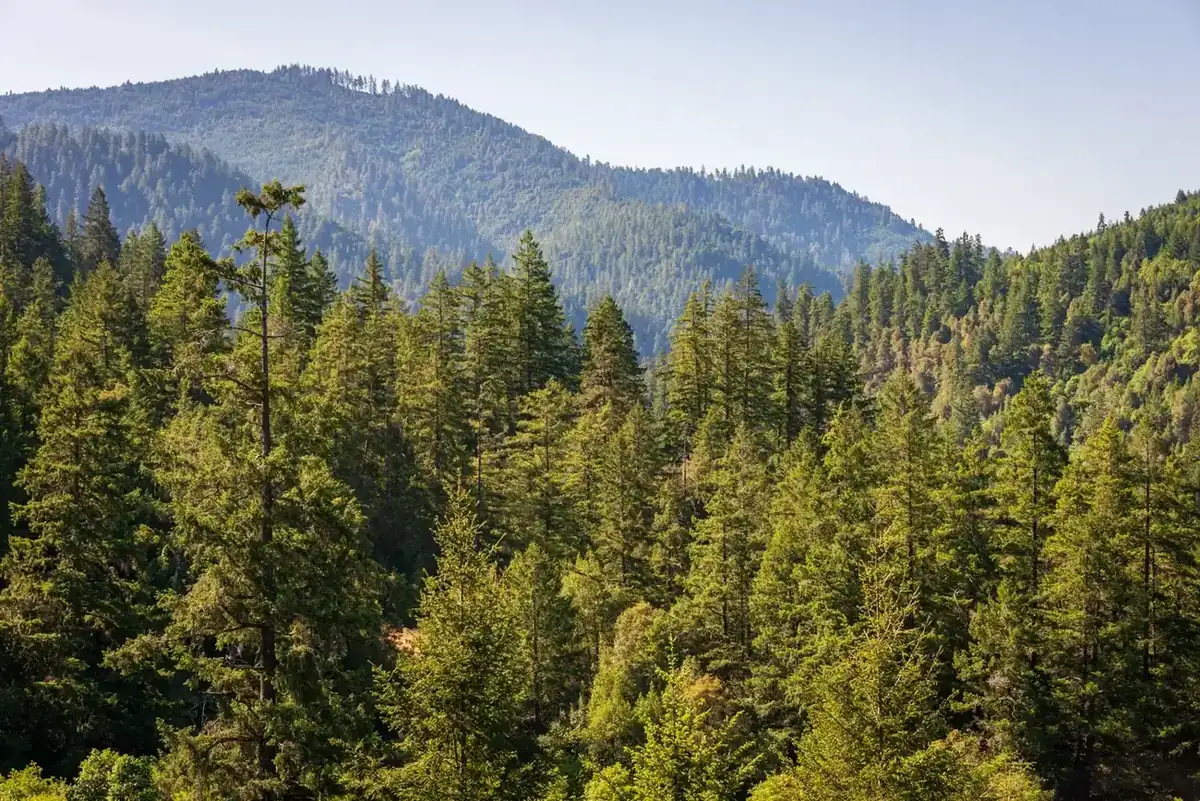
Anyone interested in the outdoors knows that California has an overabundance of natural riches, but even among avid hikers and campers there remain places that are rarely explored. One of these underutilized areas is the woodlands of northern California and southern Oregon within the Klamath Mountains, known by some as the Ancient Forest. The density of the forest and scale of the region has even given rise to the Bigfoot legend, as it is the only plausible setting left for a large creature to remain unseen and undiscovered by humans.
A handful of environmentalists are attempting to establish a National Park from the strained and discontinuous public lands that encompass the mountains. "We can avoid the cumulative impacts of human activity by preserving an area that is big enough to manage," reads their campaign website. "If one area burns, another area will allow species to continue surviving into the future until the area that was burned regrows. If an animal or plant is stressed in one area, maybe there will be an area miles away where it can still thrive. We are entering an era of unprecedented climate change, not only in the United States, but in the world. Part of being ready for that change is the creation of Ancient Forest National Park."
Several federal agencies offer marginal levels of protection in the piecemeal, protected sections of these forested mountains. The differing management styles have increased the impact of forest fires as the areas managed by the US Forest Service (USFS), allow extensive logging of this ancient grove of trees. Despite the perception that the USFS is an exemplary steward of public lands, it is not tasked with protecting land like the National Park Service, but rather with managing the land. While the difference between protecting and managing land may seem like semantics, it is not. Protection means the environment must remain in its natural state, reflecting a world before there were humans altering the landscape. Management means the lands are open to being drilled, mined, and logged as long as it is kept at a sustainable level.
The USFS strategy often results in the establishment of roads hidden from the public, built to facilitate oil extraction and logging. One area is typically logged then replanted, before the next parcel of trees are logged, then after many years of cycling through the forest they will eventually arrive back where they started and begin the process again, never allowing the forests to live long enough to be designated as old-growth.
The remoteness and jagged peaks in the region have protected some sections of the Ancient Forest from logging. However, new logging roads and technology are making it possible to reach these untouched tracts of old-growth forest and it is only a matter of time until this forest becomes logged and we lose this valuable tract of wilderness forever.
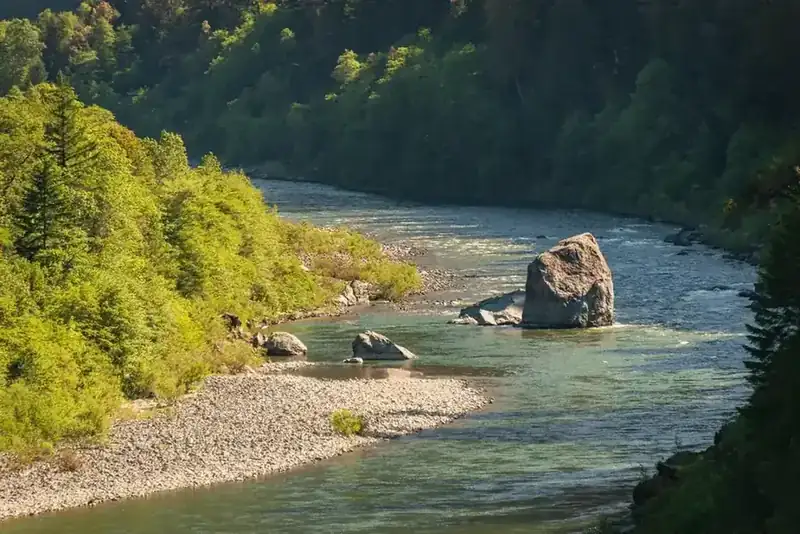
A campaign to establish an 'Ancient Forest National Park' has proposed that this section of Northern California and Southern Oregon be joined together, combining wilderness areas, roadless areas, a national recreation area, and wild and scenic rivers into one cohesive land management unit for the protection of ancient forest plants, animals and fish.
The history of National Park Campaigns
The Klamath-Siskiyou, one of the most botanically diverse temperate regions in North America, has been protected piecemeal as wilderness (Marble Mountain, Kalmiopsis, Siskiyou, Trinity Alps), an NRA (Smith River, 1990), and national monuments (Oregon Caves 1909/preserve 2014; Cascade-Siskiyou 2000). A cohesive national-park vision emerged from 1990s ancient-forest activism and was crystallized in the Ancient Forest National Park proposal (c. 2009, promoted at ancientforestnationalpark.org), a ~3.8-million-acre concept stretching from Oregon's Rogue River to California's Eel River.
- Distinct National Park attempts
- 1 (Ancient Forest National Park, c. 2009–present; no bill)
- Other designation attempts
- numerous wilderness/monument/NRA designations (7+ discrete actions listed above)
Sources
- Klamath Forest Alliance Collection (Cal Poly Humboldt Special Collections)
- KS Wild archives
- National Parks Traveler coverage (2013, 2016)
- Ancient Forest National Park proposal documents (ancientforestnationalpark.org)
- 1909
Oregon Caves National Monument proclaimed (national preserve added 2014).
- 1953/1964
Marble Mountain Wilderness; 1964/1978 — Kalmiopsis Wilderness; 1984 — Siskiyou & Trinity Alps Wilderness (California Wilderness Act of 1984).
- c. 1991
"Ancient Forest Proposal" maps developed by the Klamath Forest Alliance (Felice Pace and colleagues), archived in the KFA Collection (Humboldt State/Cal Poly Humboldt). Source: Humboldt Special Collections container list.
- 1990
Smith River National Recreation Area established.
- 2000
Cascade-Siskiyou National Monument proclaimed (expanded 2017).
- c. 2009
Ancient Forest National Park campaign (ancientforestnationalpark.org) — a national-park concept knitting together roadless/wilderness lands of the Six Rivers, Klamath, Rogue River–Siskiyou, and Shasta-Trinity forests. National Parks Traveler (June 16, 2016) described "the proposed 3.8-million-acre park" that "would stretch from the Rogue River in Oregon to the Eel River in California" and would include "about 1 million acres of unprotected inventoried roadless areas." Sources: nationalparkstraveler.org; worthitplaces.org (which lists it as "Klamath-Siskiyou National Park (a.k.a. Ancient Forest National Park)").