- Location
- Utah
- Current protection
- Antelope Island State Park, Great Salt Lake State Park, Bonneville Salt Flats & Great Salt Lake Desert
- Status
- Advocacy only, no bill
- In the book
- Featured in Undiscovered America
Why should it be a National Park?
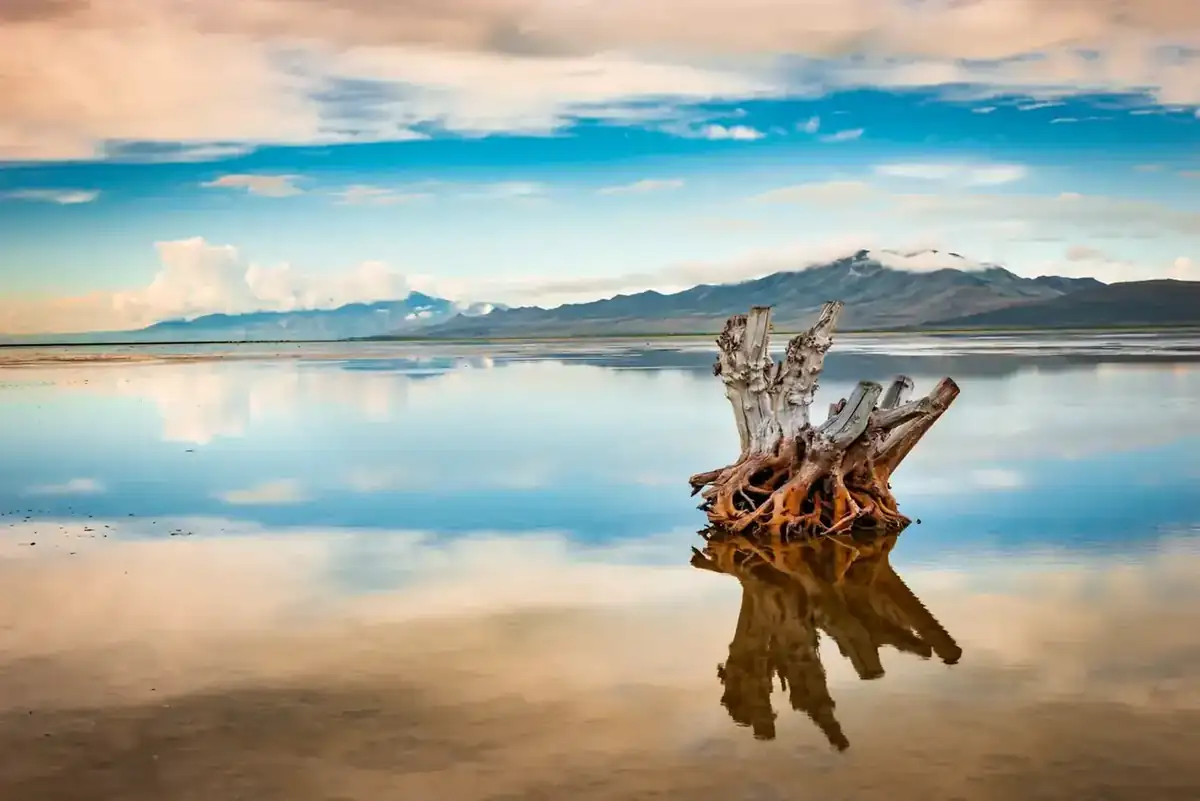
Utah has some of the most recognizable scenery in the country, from the red cliffs of Zion to the hoodoos of Bryce Canyon, and the myriad natural formations at Arches. Each is an iconic American landscape that gives us an immediate feeling of pride and recognition for our natural surroundings. Many places in Utah are similarly popular and impressive, but none is more unusual and grand than the most famous saltwater lake in the western hemisphere.
If we could go back before the colonization of North America and look at this natural landscape, several sites would have been obvious to preserve. Many of these have become the National Parks we know and love. However, places like the Great Salt Lake and neighboring Bonneville Salt Flats are natural wonders that haven't been counted among the places we identify as worth honoring and preserving. The Great Basin region, where both sites are located, holds some of the most alien environments on this continent. The desolate waters and salt pans that blanket the region create a seemingly lifeless expanse.
The Great Basin derives its name because of all water within the region that has no natural outlet to oceans. The Great Salt Lake, covering roughly 1,700-square-miles in Northern Utah, has major tributaries; the Jordan, Weber, and Bear Rivers, flowing into it which have no means of escape except evaporation. Thus, leaving millions of tons of minerals and salt as its defining quality and giving the lake its name. The salinity of the lake often draws comparisons to the Dead Sea because swimmers can float with relative ease.
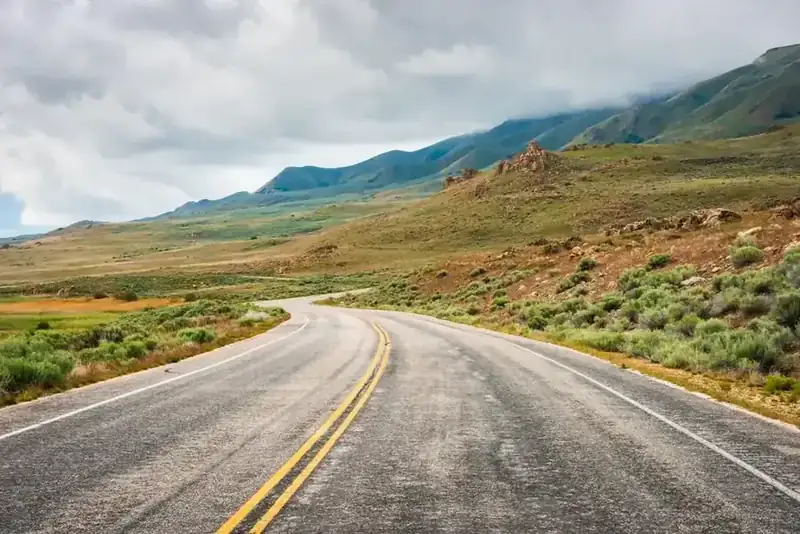
Due to its shallowness, the water level can fall and rise dramatically depending on precipitation, hence the region's prolonged drought and wet periods. The fluctuation causes several islands to rise and sink, but 11 permanent islands populate the lake year-round. Most prominent among them is Antelope Island State Park, which offers easy access to the lake's best features.
The Bonneville Salt Flats are adjacent to the lake in what's called the Great Salt Lake Desert. The Salt Flats are known for their vast, bleached white appearance, which becomes a thin mirror-like lake after rare rainfall. Most of the 40-square-miles of the salt flats are open and expansive, with little to no activity. Because of the size and scale of the flat terrain, it's an ideal place for experimental vehicles attempting to set new land-speed records as well as alien landscapes for film productions.
Great Salt Lake was considered for National Park status in 1960. Congressional hearings were held, but ultimately the proposal failed.
The history of National Park Campaigns
The lake's one legislative moment came in 1966–67, when Sen. Frank Moss carried a Great Salt Lake National Monument bill through four days of Senate hearings before it died amid opposition from lakeshore landowners and mineral interests. Utah took the state-park route (Great Salt Lake SP; Antelope Island SP, 1969/1981). The idea returned in 2022–24 as a "Great Salt Lake National Park" proposal from ethnobotanist Paul Alan Cox and BYU students, without a bill.
- Distinct National Park attempts
- 1 (2022–24 advocacy, no bill)
- Other designation attempts
- 1 (national monument bill S. 25, 1966–67, two Congresses, four hearing days)
Sources
- Great Salt Lake National Monument: Hearings on S. 25 (89th Cong., 1966
- 90th Cong., 1967, Parts 1–2)
- Frank E. Moss papers (University of Utah Marriott Library)
- Utah State Parks, Antelope Island history
- Paul Alan Cox, Deseret News (2023)
- 1928 / 1957–65
Bear River Migratory Bird Refuge (1928); Golden Spike NHS (1957 as a state-managed site; federal 1965) — neighbors that shaped the 1966 debate.
- 1965–66
S. 25 (89th Cong.), Sen. Frank E. Moss (D-UT), "to provide for the establishment of the Great Salt Lake National Monument." Senate Parks and Recreation Subcommittee hearings June 15, 1966 (Salt Lake City; Moss presiding, Sens. Church and Jordan present) and October 4, 1966; printed record 117 pp. Opposition letters included the Great Salt Lake Lands Association (Earl J. Knudson) and the Brigham City Chamber of Commerce. (govinfo CHRG-89shrg70465)
- 1967
S. 25 (90th Cong.) reintroduced; hearings March 13, 1967 (25 pp.) and June 12, 1967 (Part 2). No committee report or floor action found; the bill died. (govinfo CHRG-90shrg76766p2; UNT Monthly Catalog)
- 1969 / 1981
Antelope Island State Park established on the island's north end (1969); the state buys the rest of the island (1981). VERIFY dates.
- 2022–2024
"Great Salt Lake National Park" advocacy. Paul Alan Cox's 2023 Deseret News op-ed; BYU student policy report; meetings with Rep. Blake Moore; the delegation calls the lake "a state issue." No bill. (Deseret News; KUTV)