- Location
- Utah
- Current protection
- Grand Staircase-Escalante National Monument (Escalante Canyons unit), Glen Canyon National Recreation Area (adjacent), Dixie National Forest
- Status
- Dormant
- In the book
- Not featured in Undiscovered America
Why should it be a National Park?
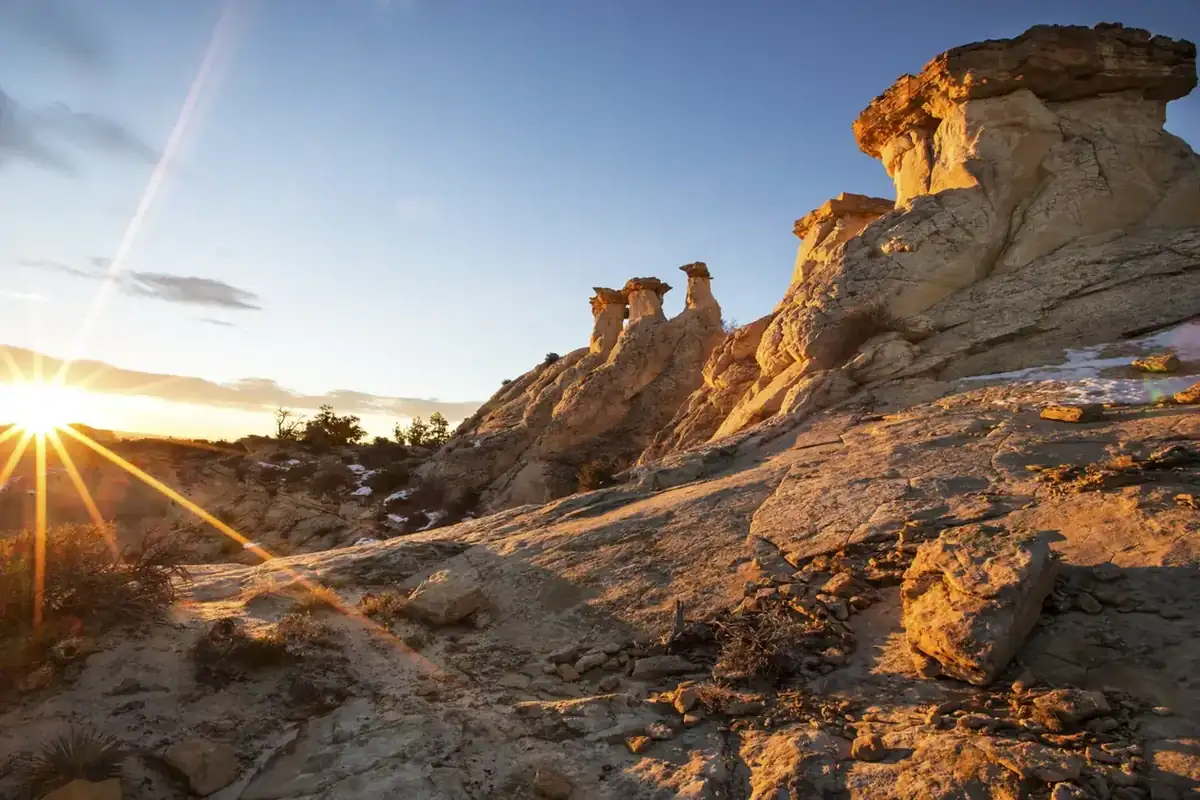
The Escalante was the last river system mapped in the continental United States. It was named in 1872, decades after the Rockies had been surveyed and the transcontinental railroad finished, because the country it drains is a labyrinth that gave surveyors no easy way in. It still does not. The canyons run for a hundred miles through Navajo sandstone, most of them narrow, many of them slot canyons only a few feet wide, and the way to see them is to walk down one and hope it goes.
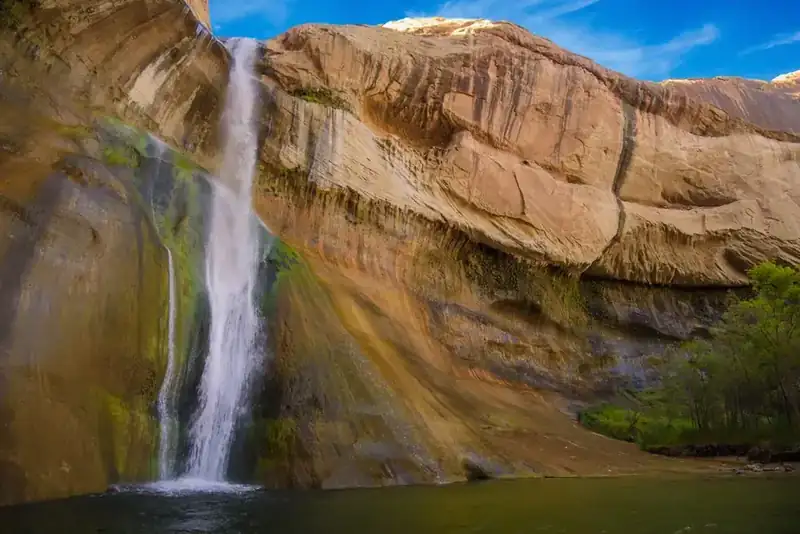
Coyote Gulch has natural bridges and an arch and a creek running under cottonwoods a thousand feet below the rim. The Golden Cathedral is a chamber where potholes have broken through the roof and light falls in columns. Death Hollow, Neon Canyon, Harris Wash, Twenty Five Mile Wash. The names came from stockmen who tried to run cattle here and mostly failed. Even now there are side canyons that see a few dozen people a year.
The Hole-in-the-Rock Trail crosses this country, the route a Mormon wagon expedition blasted and winched through in the winter of 1879 and 1880 to reach the San Juan. It took them six months to travel two hundred and fifty miles. The notch they cut in the rim above the Colorado is still there.
The Escalante has never had a National Park of its own. It spent 1996 through 2017 inside Grand Staircase-Escalante National Monument, and when that monument was cut roughly in half, a bill appeared to carve an Escalante Canyons National Park and Preserve out of the remainder. Conservation groups opposed it, arguing it would have written the reduction into permanent law and created a park the Park Service would not actually run, governed by a council with a county majority. The monument was restored in 2021 and the bill went away. What is left is a National Park's worth of canyon country with no particular plan for it.
The country is made of slots. Water off Fiftymile Mountain has cut the Navajo Sandstone into corridors a shoulder-width across and a hundred feet deep, and the names have become a kind of shorthand among canyoneers: Peekaboo, Spooky, Zebra, Neon. They are also where people die, because a storm twenty miles away can fill one in minutes, and the forecast that matters is not the one over your head.
This is the emptiest quarter of the lower forty-eight. The Hole-in-the-Rock road runs fifty-seven miles of washboard from Escalante toward the Colorado with no services on it, and the Kaiparowits Plateau to the west has no maintained roads at all. That emptiness has kept the archaeology intact: granaries, rock art, and habitation sites in numbers no one has finished counting.
The politics have been unusually raw. The 1996 proclamation was announced from the rim of the Grand Canyon, in Arizona, without notice to Utah's governor or delegation, and southern Utah has not forgotten it. The monument was cut in 2017 and restored in 2021, which means the same ground has been redrawn twice in five years. A park designation, whatever else it would do, would put the boundary in statute where a proclamation cannot move it.
The history of National Park Campaigns
The National Park Service considered a park unit in the Escalante country in the late 1930s and early 1940s. After President Trump reduced Grand Staircase-Escalante National Monument in December 2017, Rep. Chris Stewart introduced bills to codify the reduction and create an Escalante Canyons National Park and Preserve within a roughly 243,241-acre monument. The 2021 monument restoration mooted the effort.
- Distinct National Park attempts
- 2 (2017; 2020)
- Other designation attempts
- 2 (monument 1996; proposed successor monuments 2017)
Sources
- govinfo.gov, BILLSTATUS-115hr4558
- NPCA position paper on H.R. 4558
- Utah Legislature SCR008 (2018)
- Late 1930s–early 1940s
NPS considers a park unit in the Escalante country as part of the proposed Escalante National Monument.
- September 18, 1996
Grand Staircase-Escalante National Monument proclaimed.
- December 4, 2017
Presidential proclamation reduces the monument by roughly half.
- December 6, 2017
Rep. Chris Stewart (R-UT) introduces H.R. 4558, creating an Escalante Canyons National Park and Preserve within a 243,241-acre monument, plus two other monuments and a county-majority management council.
- December 14, 2017
House Natural Resources Subcommittee on Federal Lands hearing.
- 2018
Utah Legislature adopts SCR008 supporting H.R. 4558.
- October 14, 2020
Reintroduced as H.R. 8446.
- October 8, 2021
President Biden restores the monument, mooting the proposal.