- Location
- Alaska
- Current protection
- U.S. Fish and Wildlife Service refuge land on Unimak Island, including the Unimak Wilderness
- Status
- No active campaign
- Tier
- Tier 2 · National Monument
- In the book
- Not featured in Undiscovered America
Why should it be a National Park?
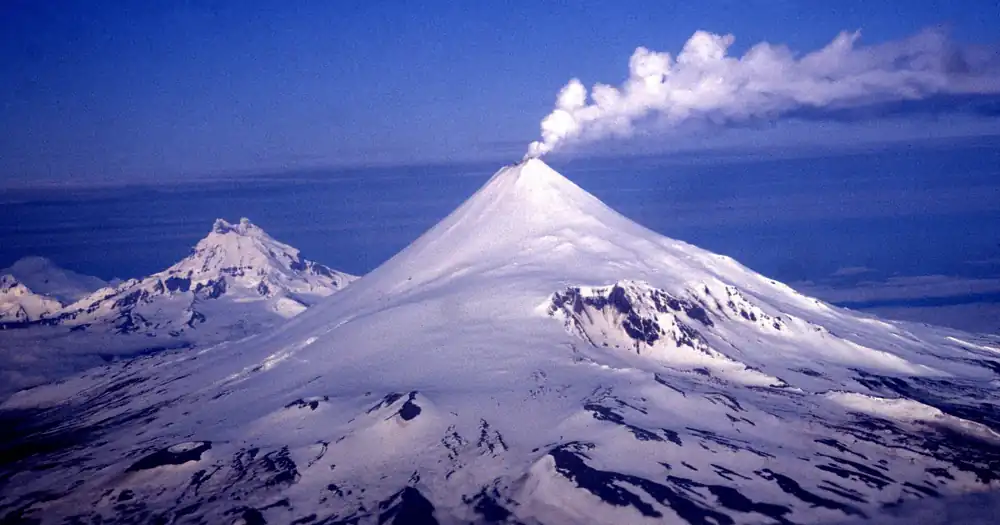
Mount Shishaldin rises 9,373 feet straight out of the sea on Unimak Island, the highest peak in the Aleutians and one of the most perfectly shaped volcanic cones on Earth. It is also one of the most active, trailing steam from its summit over a chain of volcanoes that runs a thousand miles toward Asia.
No part of the country shows the Ring of Fire at work the way the Aleutians do. A National Park here would honor the wildest volcanic landscape the United States holds.
The history of National Park Campaigns
The Aleutian volcanoes were suggested for a National Park in 1948 by an Assistant Secretary of the Interior. The Park Service answered that Shishaldin was inaccessible and seldom visible through the fog, and that Congress had not yet provided for the large Alaska parks it already had, but it promised a field study if money ever came.
- Distinct National Park attempts
- 1 (1948–49 suggestion)
- Other designation attempts
- 1 (1980 wilderness)
Sources
- National Park Service, Suggested Areas Resumes (1957)
- Wikipedia, List of proposed National Parks of the United States
- December 6, 1948
Assistant Secretary of the Interior William E. Warne suggests that Mount Shishaldin or another Aleutian volcano might merit National Park status.
- 1948–1949
Director Newton Drury replies that Shishaldin is inaccessible and fogbound; former Mount McKinley superintendent Frank Been hesitates to single out one volcano without further study.
- 1949
The director writes that the Service would study Shishaldin and other volcanoes if funds were made available.
- 1980
The Alaska National Interest Lands Conservation Act designates the Unimak Wilderness around the volcano.