- Location
- Virginia/Kentucky
- Current protection
- Breaks Interstate Park
- Status
- No active campaign
- Tier
- Tier 3 · Smaller national site
- In the book
- Not featured in Undiscovered America
Why should it be a National Park?
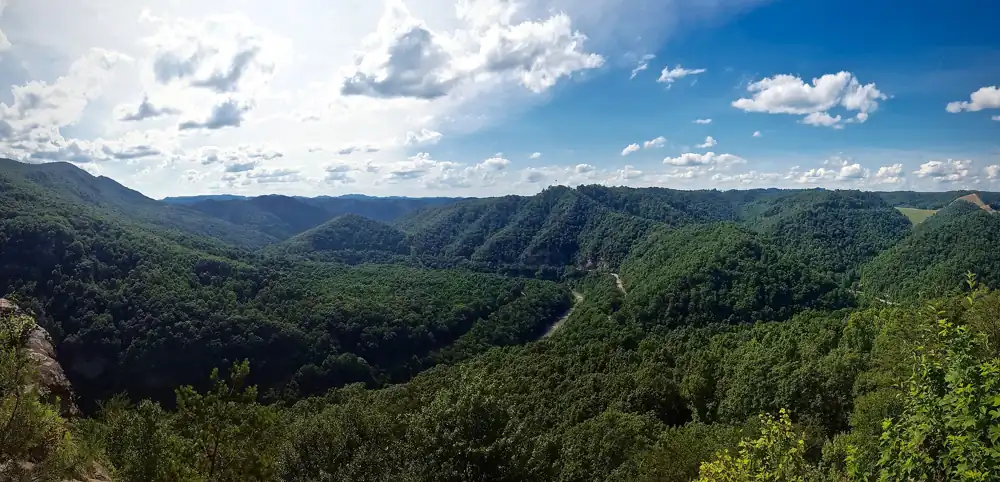
On the Virginia–Kentucky line, the Russell Fork of the Big Sandy River cuts a five-mile gorge more than 1,600 feet deep through Pine Mountain, the largest canyon in the eastern United States. Its locals call it the Grand Canyon of the South.
It was proposed as a National Park before the two states took it on together. A canyon of this scale in the East deserves to stand with the others.
The history of National Park Campaigns
In 1935, the chairman of Virginia's conservation commission asked how to seek federal help for a National Park run by the state. The Park Service investigated in 1937, and legislation for a Breaks of the Sandy National Park was before Congress in 1939. Kentucky and Virginia later formed an interstate compact instead, and Congress consented to the Breaks Interstate Park Commission.
- Distinct National Park attempts
- 1 (1935–39, including the 1939 bill)
- Other designation attempts
- 1 (interstate park)
Sources
- National Park Service, Suggested Areas Resumes (1957)
- "Legislation," The Regional Review, NPS Region One (February 1939)
- Wikipedia, List of proposed National Parks of the United States
- March 6, 1935
Wilbur C. Hall, chairman of Virginia's State Commission on Conservation and Development, asks how to apply for federal aid for a National Park under state administration.
- Summer 1937
The Park Service investigates the Breaks.
- 1939
Legislation to establish a Breaks of the Sandy National Park is before Congress.
- 1954
Breaks Interstate Park opens under a compact between Kentucky and Virginia, with the consent of Congress.