- Location
- Virginia
- Current protection
- George Washington and Jefferson National Forests, including the High Knob Recreation Area
- Status
- No active campaign
- Tier
- Tier 3 · Smaller national site
- In the book
- Not featured in Undiscovered America
Why should it be a National Park?
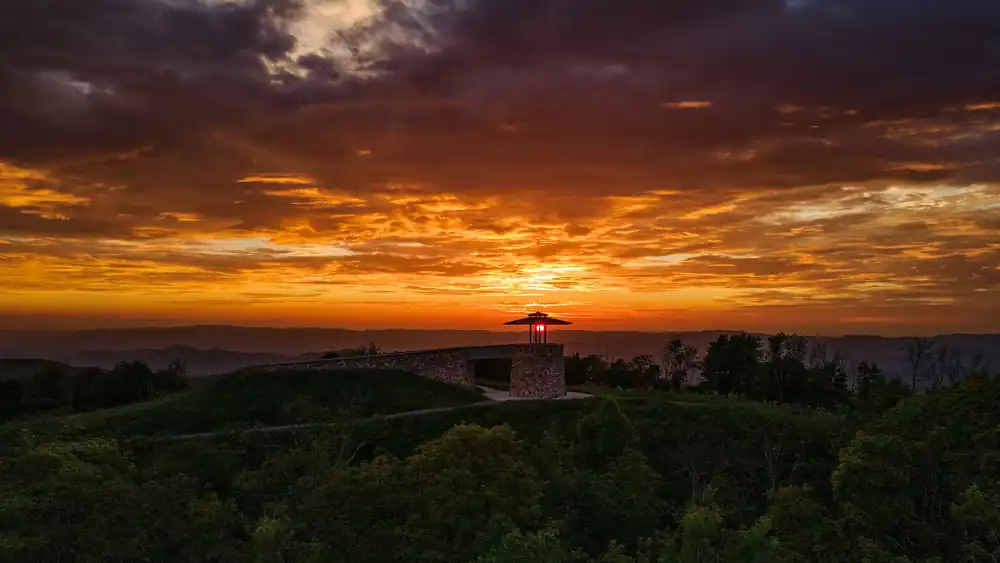
High Knob rises above the town of Norton in the far southwest of Virginia, a forested massif whose summit tower looks out across the mountains of several states and whose slopes feed the Clinch and Powell rivers, some of the richest freshwater rivers for mussels and fish anywhere on Earth.
The fight over a park here changed the history of the National Parks in the East: it forced Congress to find out where an Appalachian park belonged. The mountains that started it deserve the same recognition they helped bring to the Smokies.
The history of National Park Campaigns
Interest in an Appalachian National Park near Norton began in 1913 with resolutions and petitions from civic groups. Rep. C. Bascom Slemp introduced two bills in 1922 and Rep. George Peery a third in the next Congress; conservation groups opposed them because no survey had shown which Appalachian area was best. The bill was reported favorably but never passed, and the controversy led Congress to authorize the survey that produced Great Smoky Mountains and Shenandoah National Parks. Sen. Harry F. Byrd tried once more for the High Knob region in 1935.
- Distinct National Park attempts
- 3 (1913 petitions and the 1922–25 Slemp and Peery bills; 1935 Byrd bill)
- Other designation attempts
- 1 (1936 national forest)
Sources
- National Park Service, Suggested Areas Resumes (1957)
- Edmund B. Rogers, History of Legislation Relating to the National Park System Through the 82d Congress (NPS, 1958)
- Wikipedia, List of proposed National Parks of the United States
- 1913
Civic groups send resolutions and petitions for a National Park near Norton.
- 1922
Rep. C. Bascom Slemp introduces two Appalachian National Park bills in the 67th Congress.
- 1923–1925
Rep. George C. Peery introduces a third in the 68th Congress; conservation groups oppose it at the House Public Lands hearing, and it is reported favorably but not acted on.
- 1924
The controversy leads to the Southern Appalachian National Park Committee, whose survey produces Great Smoky Mountains and Shenandoah National Parks.
- 1935
Sen. Harry F. Byrd introduces a bill for a park in the High Knob region; it is disapproved as inferior to the two new parks.
- 1936
The area becomes part of Jefferson National Forest.