- Location
- Montana
- Current protection
- Makoshika State Park
- Status
- No active campaign
- Tier
- Tier 3 · Smaller national site
- In the book
- Not featured in Undiscovered America
Why should it be a National Park?
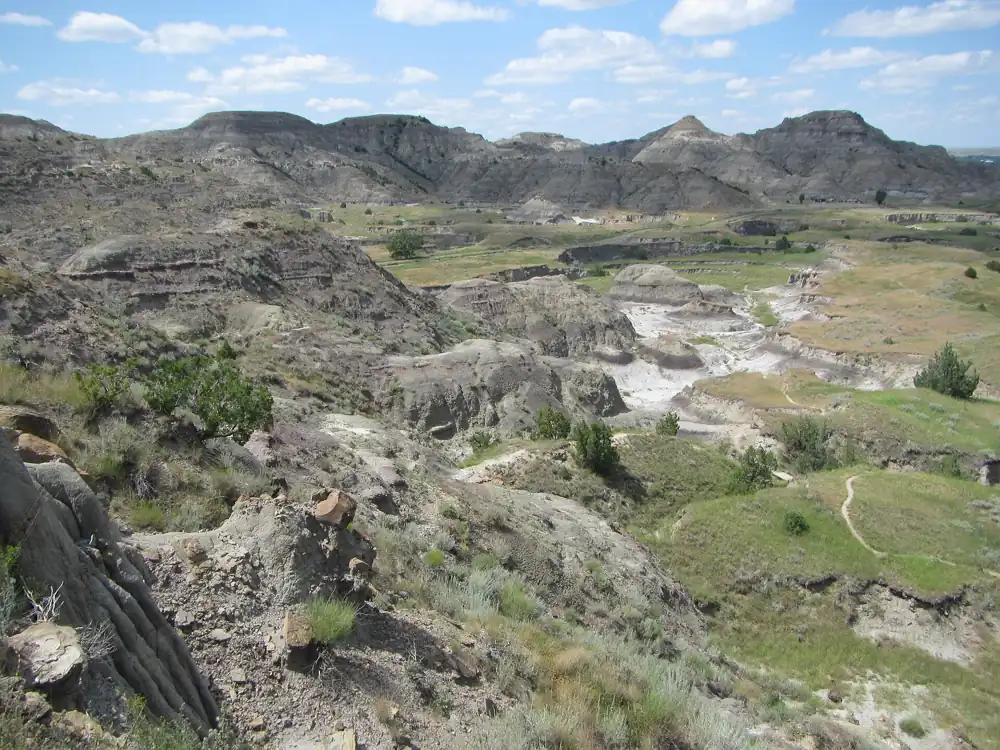
Outside Glendive, the prairie drops into badlands of banded clay and sandstone, hoodoos and caprock ridges carved from the Hell Creek Formation, the rock that holds the bones of Triceratops and Tyrannosaurus.
The town wanted a National Park here in 1938. Montana's largest state park carries the idea today, and the badlands deserve a national title.
The history of National Park Campaigns
In 1938, the Glendive Chamber of Commerce promoted a Badlands National Park near town, its secretary writing that a park would give tourists a reason to stay. The U.S. Grazing Service director and later local interests renewed the proposal, and in 1953 the badlands became Makoshika State Park.
- Distinct National Park attempts
- 3 (1938; 1945; 1957)
- Other designation attempts
- 1 (1953 state park)
Sources
- Lary M. Dilsaver and William Wyckoff, "Failed National Parks in the Last Best Place," Montana 59:3 (2009)
- Wikipedia, List of proposed National Parks of the United States
- 1938
The Glendive Chamber of Commerce promotes a Makoshika Badlands National Park; secretary K. E. Burleigh writes federal officials in support.
- 1945
The idea is renewed, with the U.S. Grazing Service director among its backers.
- 1953
Makoshika State Park is established.
- 1957
Local interests raise National Park status again.