- Location
- Wyoming/Montana
- Current protection
- Bighorn Canyon National Recreation Area (National Park Service)
- Status
- No active campaign
- Tier
- Tier 2 · National Monument
- In the book
- Not featured in Undiscovered America
Why should it be a National Park?
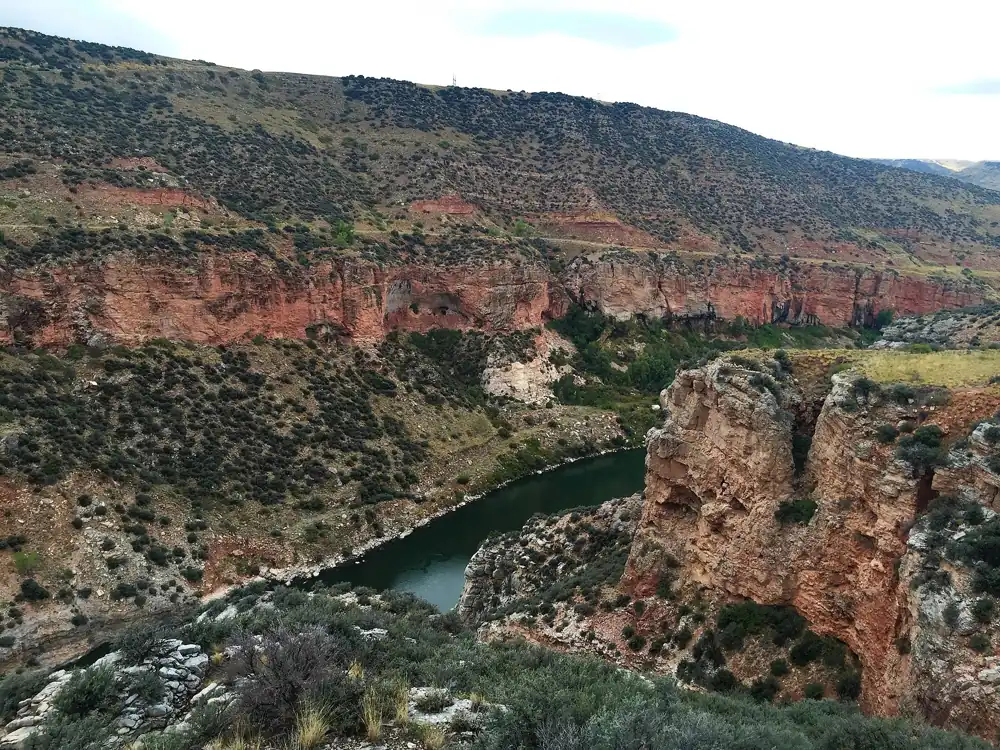
Bighorn Canyon cuts more than a thousand feet deep through limestone on the Wyoming–Montana line, a red-and-gray gorge that now holds Bighorn Lake behind Yellowtail Dam. The Pryor Mountain Wild Horse Range runs along its west side, one of the few places in the country to see mustangs thought to descend from Spanish colonial horses.
The canyon was proposed as a National Park a century ago and ended up as a reservoir with a recreation area around it. Its walls, its horses, and its Crow history still make the case the park-seekers made in 1923.
The history of National Park Campaigns
The National Parks Association's National Parks committee investigated Big Horn Canyon in 1923 and recommended it, but the Park Service did not approve it, and a 1934 revival also went nowhere. The canyon's future was settled by the Bureau of Reclamation instead: Yellowtail Dam filled it in the 1960s, and Congress created Bighorn Canyon National Recreation Area in 1966.
- Distinct National Park attempts
- 2 (1923; 1934)
- Other designation attempts
- 1 (1966 national recreation area)
Sources
- National Park Service, Suggested Areas Resumes (1957)
- Wikipedia, List of proposed National Parks of the United States
- 1923
The National Parks Association's National Parks committee investigates the canyon and recommends it; the Park Service does not approve.
- 1934
The proposal is raised again without result.
- October 15, 1966
Congress establishes Bighorn Canyon National Recreation Area.
- 1967
Yellowtail Dam is completed, filling Bighorn Lake.
- 1968
The Pryor Mountain Wild Horse Range is established on the canyon's west side.