- Location
- Oregon
- Current protection
- Willamette National Forest, including the Mount Jefferson, Mount Washington, Menagerie, and Middle Santiam wildernesses
- Status
- Forest Service monument campaign; no National Park campaign
- Tier
- Tier 2 · National Monument
- In the book
- Not featured in Undiscovered America
Why should it be a National Park?
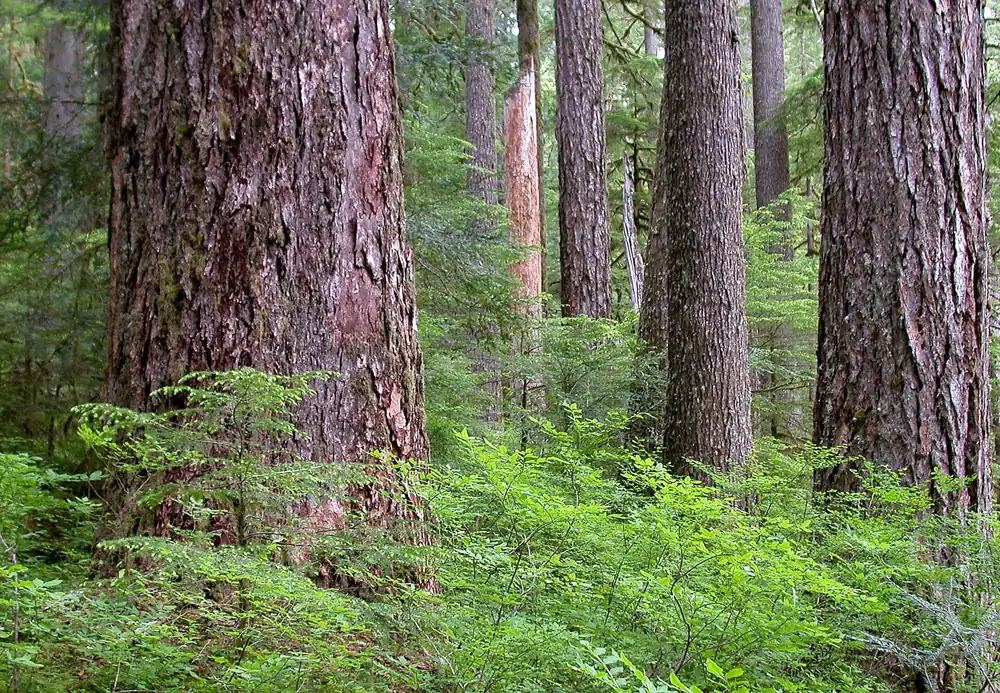
On the west slope of Oregon's Cascades, in the upper Santiam and McKenzie watersheds, grow some of the finest remaining stands of ancient Douglas-fir on Earth: trees up to 300 feet tall and a thousand years old, in the country where the botanist David Douglas found forests too vast for one person to take in.
More than a century of logging has turned most of Oregon's original Douglas-fir forest into plantations, and what survives here is protected only in scattered wildernesses. Oregon's state tree deserves a place protected at the scale of a National Park.
The history of National Park Campaigns
Friends of Douglas-Fir National Monument, led by conservation photographer David Stone with Steven Sharnoff, has worked since the late 2010s to protect the old-growth forests of the Santiam, Calapooia, and McKenzie watersheds. The proposal has grown from about 480,000 acres to more than 700,000, and the group's 2026 case statement calls for a monument created by Congress or by presidential proclamation. No bill has been introduced.
- Distinct National Park attempts
- 0
- Other designation attempts
- 1 (Douglas-Fir National Monument proposal, late 2010s to present)
Sources
- Friends of Douglas-Fir National Monument, Case Statement (2026)
- George Wuerthner, "The Douglas Fir National Monument Proposal," National Parks Traveler (2023)
- Sierra, "Does the Douglas Fir Tree Deserve Its Own Monument?"
- 1825–1830
Scottish botanist David Douglas explores the forests of western Oregon; the tree comes to carry his name.
- Late 2010s
Friends of Douglas-Fir National Monument forms, proposing about 480,000 acres in the Santiam watershed.
- 2023
After objections from the Friends and others, the Forest Service withdraws the 7,900-acre Quartzville–Middle Santiam timber sale.
- 2026
The group's case statement proposes a monument of more than 700,000 acres across seven watersheds.