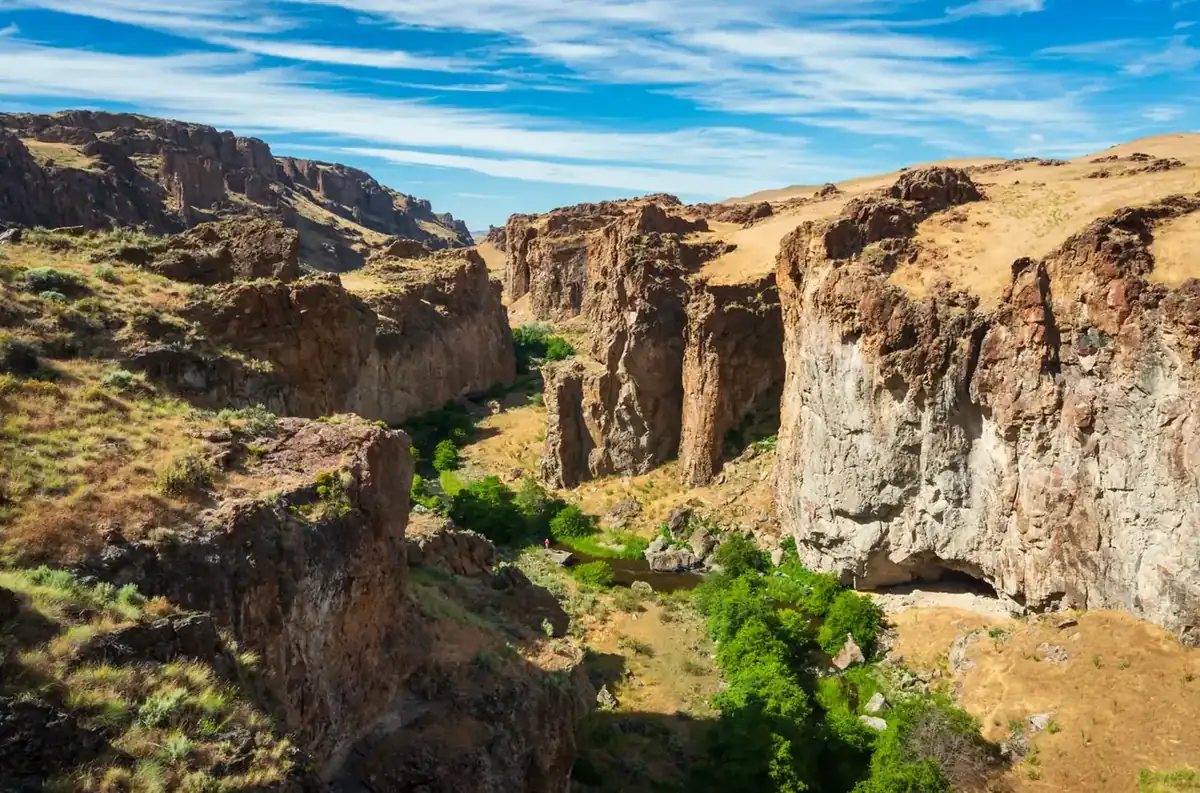
- Location
- Oregon/Idaho/Nevada
- Current protection
- Succor Creek State Natural Area, Wildcat Canyon, Pillars of Rome
- Status
- Wilderness bill in Congress; not a park effort
- In the book
- Featured in Undiscovered America
Why should it be a National Park?
The Owyhee Canyonlands is the largest uninterrupted and substantial natural wonder in the United States that is not currently a National Park. Depending on how you measure it, the Owyhee Desert is between 1.2 and 6 million-acres of majestic scenery around the border of Oregon, Idaho, and Nevada. The landforms defining the region make it nearly impossible to utilize for any purpose or activity, other than outdoor recreation. This makes it the largest region of the contiguous U.S. without cities, roads, industry, or even basic access.
The canyonlands would be better described as a network of riverways through a rocky desert environment. These waters carved sharp, deep crevices in the hard brown and yellow terrain they flow through. What remains is a sculpted maze of impassible gorges, so dense and intricate that rafting and hiking are the easiest and fastest means of seeing the area. The few roads that exist require high-clearance vehicles, and even then the roads only make it to the outermost sections of the canyonlands. If you're a traveler who is interested in being alone with nature and never seeing another person, there may be no better place to do it outside of Alaska.
Primitive campsites pop up throughout the region and off-road paths provide limited access, but information about entering the canyonlands is hard to find. At least 11 counties across three states call part of the canyon system theirs, and no central website or organization focuses on the overall region. Recently, a coalition composed almost entirely of locals pushed for a national monument designation that would offer greater preservation for the canyonlands, but ranchers in Malheur County (a county totally within the Owyhee Canyonlands) fiercely contested the proposal. A non-binding vote was held, resulting in 90 percent of the community voting against the national monument. Although the vote held no legal weight, it was a clear dismissal for protecting the largest area of unbroken and unspoiled landscape in the contiguous United States.
At present, the few people who call the area home are mostly ranchers and farmers who revel in their isolation as well as their hard-working and slow-paced lifestyles. Therefore, it is easy to see why a new National Park in their backyard does not appeal to them. However, the influx of new policies allowing lands such as these to be utilized for the extraction of natural resources opens up the land to destruction. It begs the question, would these communities be better served by preserving them as the scenic and geologic wonder? Both scenarios would bring in outsiders and their money, but only one would preserve this vast and impressive environment largely as it is.
The fight to preserve the Owyhee Canyonlands is bitter, but ongoing. The current proposal is for a national monument, but this will be an uphill battle that could one day result in a National Park.
The history of National Park Campaigns
No National Park has been proposed. Protection has come as wilderness (Idaho, 2009) and been sought as a national monument (Oregon, 2015–16 and 2024) and as Sen. Wyden's ~1.1-million-acre wilderness bill, which passed the Senate in December 2024 and died in the House.
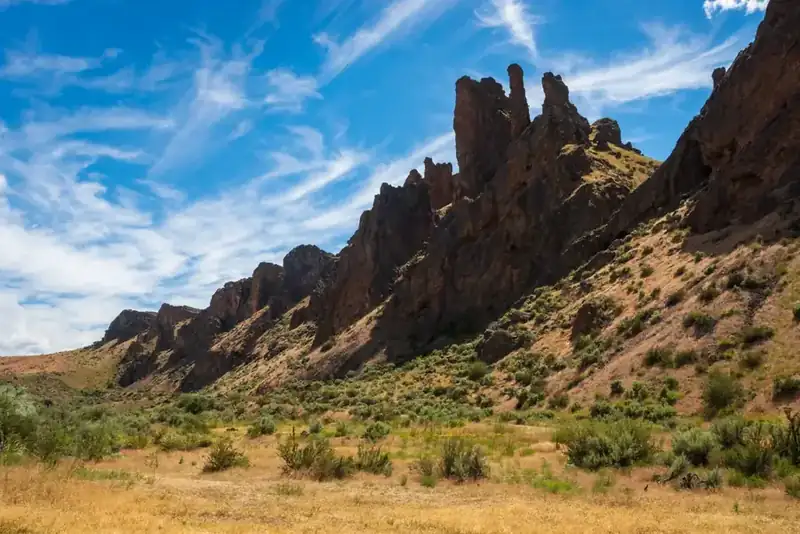
- Distinct National Park attempts
- 0
- Other designation attempts
- W&S 1984/1993; wilderness 2009; monument campaigns 2015–16, 2024; wilderness bills 2019–2025
Sources
- Owyhee Initiative records (Crapo)
- ONDA campaign archives
- congress.gov bills 116th–119th
- 1984
Owyhee Wild & Scenic River (Oregon); 1993 Idaho segments.
- March 30, 2009
Omnibus Public Land Management Act: six Idaho Owyhee wildernesses (~517,000 acres) and W&S rivers (Sen. Mike Crapo's Owyhee Initiative).
- 2015–2016
Owyhee Canyonlands national monument campaign (ONDA, Keen); Malheur County non-binding vote ~90% against (May 2016); Obama does not act.
- 2019 / 2022 / 2023
Wyden/Merkley Malheur Community Empowerment for the Owyhee Act (S. 2828, 2019; reintroduced 2022; S. 1890, 2023 — VERIFY).
- December 2024
Senate passes the Wyden bill by unanimous consent; House does not act; Rep. Bentz's competing bill (Nov. 2024); renewed calls for a Biden monument go unanswered.
- 2025–2026
Bill reintroduced; in limbo.