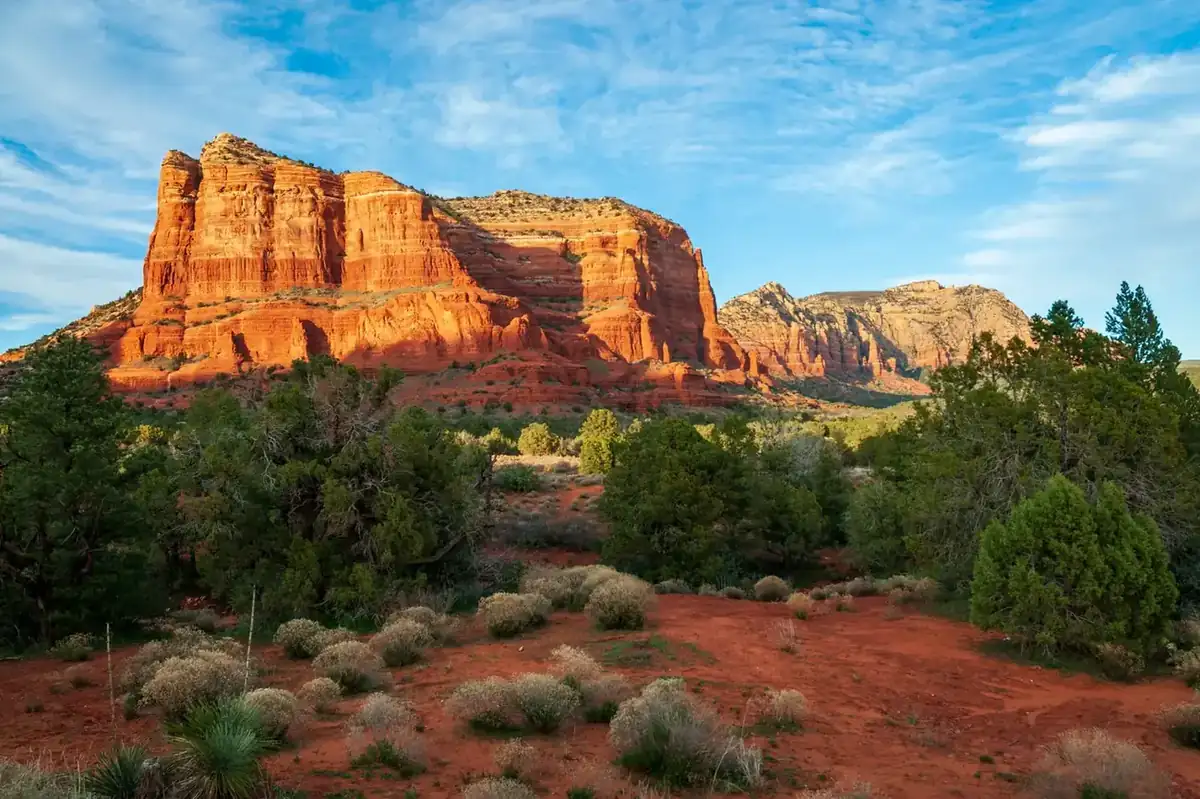
- Location
- Arizona
- Current protection
- Coconino National Forest, Slide Rock State Park, Montezuma Castle National Monument
- Status
- Active citizen campaign for a national monument
- In the book
- Featured in Undiscovered America
Why should it be a National Park?
It might surprise most people to learn that Sedona is not a National Park. Its scale and appearance make this landscape an obvious candidate for park status, but the red rocks and surrounding hillsides are actually a combination of national forest, state parks, and private lands. Despite the local population and the number of visitors brought in by the resorts, shops, and restaurants, most of the area remains in its natural state.
Arizona has three National Parks; the Grand Canyon, Petrified Forest, and Saguaro. None of these parks focus on the iconic visual identity of red rock buttes and mesas that many people associate with the state. Sedona has similarities to Monument Valley with its red rock features. However, Sedona's buttes are situated between a notable base of greenery rather than an arid landscape. This contrast is fairly unique to the Colorado Plateau.
Along with its stunning natural beauty, the Verde Valley where Sedona is located is filled with historic structures and artifacts. Human habitation can be traced back as far as 11,500 BC. Extensive rock art, pueblo ruins, and cliff dwellings dot the surrounding areas. The most famous ones are Montezuma Castle and Tuzigoot National Monuments. These are National Park Service sites in neighboring towns, but Palatki and Honanki Heritage Sites are two sister ruins within Sedona itself.
Coconino National Forest is the single biggest manager of the local public lands. The forest extends to 1,890,000 acres throughout the region, surrounding both Sedona and Flagstaff to the north. Between these two cities are some notable landforms such as Oak Creek Canyon and Slide Rock State Park. Several other state parks are in the immediate vicinity of Sedona, ranging from historic forts, ranches, and mines to spectacular natural landmarks.
This array of landscapes and history is often missed by tourists who visit the town of Sedona in search of resorts, spiritualism, and day-hikes that have made the area popular.
The history of National Park Campaigns
Uniquely in this batch, no historical national-park proposal exists for the Sedona red rocks. Protection efforts have run through the Forest Service (a wilderness area, a plan amendment) and, since the 1990s, a citizen campaign for a national monument — never a park.
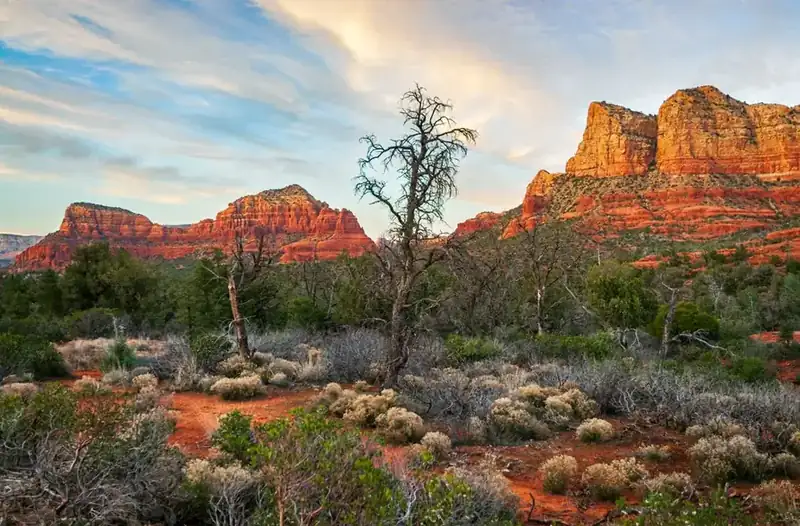
- Distinct National Park attempts
- 0
- Other designation attempts
- 1 sustained (national monument campaign, 1993 petition → ~2013 formal proposal), plus the 1984 wilderness and 1998 plan amendment
Sources
- Sedona Verde Valley Red Rock National Monument campaign site
- Coconino NF Amendment 12 decision notice (June 6, 1998)
- Red Rock–Secret Mountain Wilderness designation (1984 Arizona Wilderness Act)
- 1906 / 1939
Montezuma Castle NM; Tuzigoot NM (nearby, not the red rocks proper).
- 1977 / 1985 / 1991
Dead Horse Ranch, Slide Rock, and Red Rock State Parks.
- 1984
Red Rock–Secret Mountain Wilderness (47,194 acres) designated within the Coconino NF. UNVERIFIED on a distinct 1930s "Oak Creek Canyon National Monument" idea or Arizona legislature memorials — none found.
- 1993
5,000 citizens petition for special designation of Coconino NF lands around Sedona; the Yavapai and Coconino County Boards of Supervisors support special designation (again in May 2005).
- 1994
10th Sedona Forum recommends permanent protection.
- June 6, 1998
Amendment 12 to the Coconino NF Land Management Plan finalized, covering ~160,000 acres near Sedona with a restrictive land-exchange policy and 12 management areas.
- 2013–present
The citizen Sedona Verde Valley Red Rock National Monument campaign, seeking presidential designation of ~80,000 acres (some materials say ~160,000 acres) within the Coconino NF; petition directed to the President; emphasizes 14,000 years of habitation and antiquities protection. UNVERIFIED on formal congressional sponsors; the campaign is petition/proclamation-oriented, not bill-based. Yavapai-Apache Nation positions not confirmed.
No 2020–2026 federal bill was located.