- Location
- Arizona
- Current protection
- Canyon de Chelly National Monument
- Status
- No active campaign
- In the book
- Featured in Undiscovered America
Why should it be a National Park?
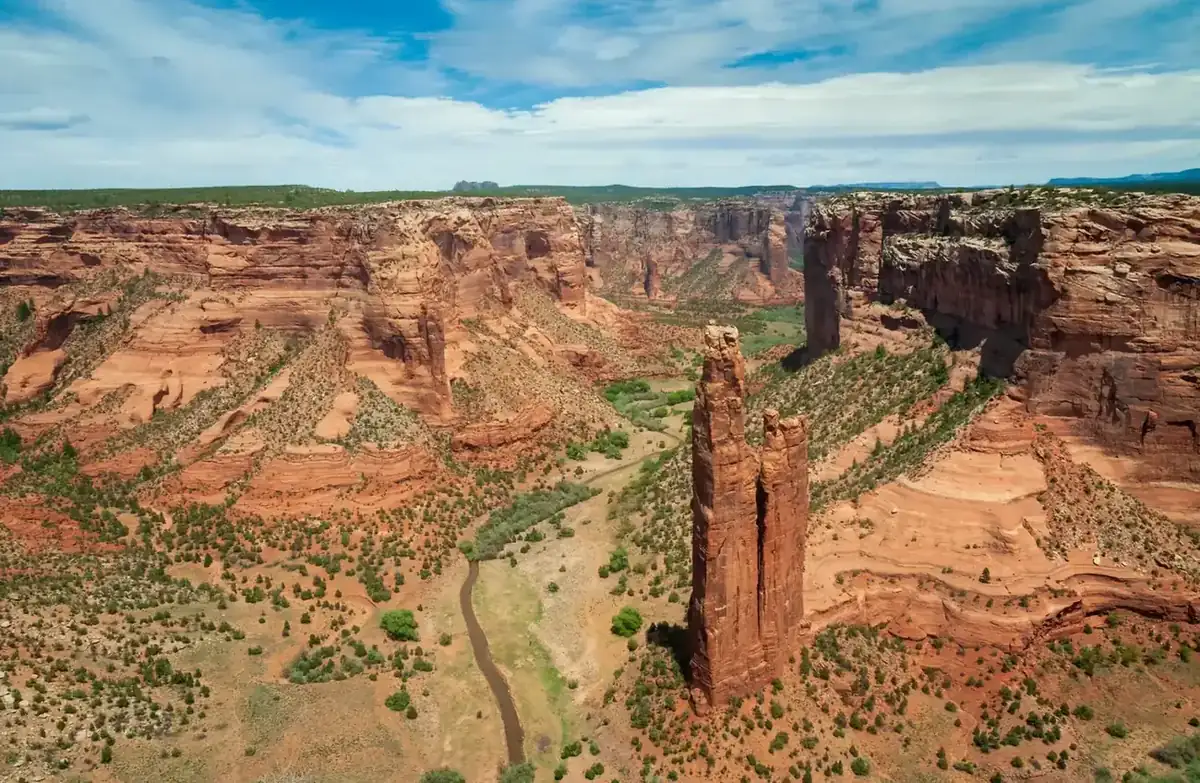
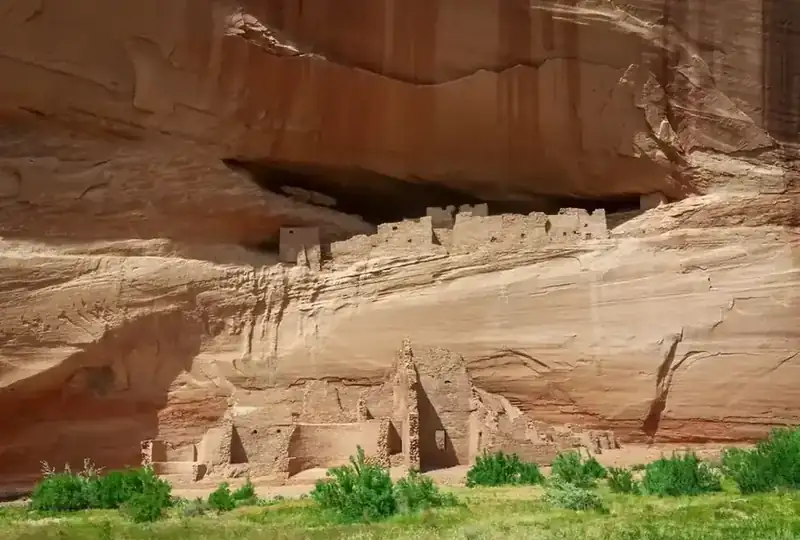
Arizona is famous for sandstone canyons and ancient ruins and Canyon de Chelly in the northeast corner of the state is the best place to find incredible examples of both. This complex of ruin-filled canyons intersect in a maze of towering orange cliffs. Waterways created these canyons with the help of elevation and gravity. The Colorado Plateau is a high desert region covering the four corners area of the southwest. The roughly mile high elevation makes the soft sandstone more susceptible to erosive forces than stone at sea level. This system of interconnected canyons are home to a number of Anasazi cliff dwellings showcasing 2,000 years of continuous habitation that has lasted through today.
An indigenous population of Navajo still lives in the canyon. In order to protect their way of life, visitors are only granted limited access. The easiest way to experience Canyon de Chelly is from the scenic drive which has panoramic overlooks. These viewpoints provide a series of spectacular, sweeping vistas allowing a visitor a vast, but intimate experience with the canyon and ancient ruins built into their walls. The lands in and around the canyon belong to the Navajo Tribal Trust of the Navajo Nation but are co-managed with the National Park Service to allow visitors to enjoy the scenery and history.
The canyon itself is mostly off-limits to tourists unless accompanied by park rangers or authorized native guides. The only exception for visiting the canyon floor without a guide is the White House Ruins Trail which leads from the canyon rim at 560 feet to the riverbed below. The three-mile round-trip trail takes hikers down a set of switchbacks before reaching the river and ruins below.
Canyon de Chelly National Monument, as it is currently designated, allows the NPS to provide interpretation throughout the park without owning the land. Even the park visitor center is located outside of the monument boundaries. This monument is a unique partnership and it could be a model for the inclusion of several additionally deserving American Indian reservation sites into the NPS framework.
By establishing a National Park here, it would set a precedent that could elevate this and other magnificent sites like the Stronghold Badlands in South Dakota, which have been considered for the first tribal National Park. Similarly, the Adirondacks and Atchafalaya Basin would have an easier time becoming parks themselves if their lands could remain in state control under a partnership with the NPS. If the 'National Park' designation could be better applied to more deserving landscapes, it would bring tourists, jobs, and cultural admiration for the natural environment around these lesser-visited natural wonders.
The history of National Park Campaigns
Canyon de Chelly is the only NPS unit sitting entirely on tribal trust land: the Navajo Nation retains title, and the monument is co-managed with the NPS. NPS interest dated to the 1919 Gleason report; after the Navajo Tribal Council's approval (Fort Wingate, July 8, 1930) and enabling legislation (Feb. 14, 1931), President Hoover proclaimed the monument April 1, 1931. A grander "Navajo National Park" idea (Roger Toll's early-1931 recommendation to unite Monument Valley, Canyon de Chelly, and the Navajo/Rainbow Bridge monuments) was pushed by Horace Albright but rejected by the Commissioner of Indian Affairs. [Round 7 correction: the "1933 park-expansion bill" is a conflation — the 1933 action was the March 1, 1933 boundary proclamation (Proc. 2036); the park-expansion idea was administrative (Albright/Toll), not legislation.]
- Distinct National Park attempts
- ~2 — the early-1931 Toll/Albright "Navajo National Park" and the 1937 revival (the "1933 bill" is a conflation with the boundary proclamation).
- Monument/other designation attempts
- the 1924–1931 monument campaign (multiple council votes and two 1931 bills) culminating in the April 1, 1931 proclamation; the 1933 boundary amendment
Sources
- NPS, Canyon de Chelly National Monument: Administrative History (esp. Ch. 2)
- Proclamations 1945 & 2036
- Act of Feb. 14, 1931 (16 U.S.C. §445)
- Hal Rothman, Navajo National Monument: An Administrative History
- Roger Toll inspection reports (NPS/NARA RG 79)
- David M. Brugge, works on Navajo history
- 1919
Gleason report first prompted serious NPS consideration of monument status.
- 1923
Hunter Clarkson (Santa Fe Railway transport operator) urged protection to Asst. Director Arno Cammerer (after earlier discussing it with Director Stephen Mather); Cammerer's investigation found "a high degree of erosion" and vandalism at the ruins.
- Sept. 17, 1924
Cammerer to Commissioner of Indian Affairs Charles H. Burke, proposing a national monument under the Antiquities Act.
- July 7–8, 1925
Navajo Tribal Council (Fort Wingate) conditionally accepted a monument "providing the grazing and other rights of the Indians are in no way interfered with." Special commissioner H.J. Hagerman had reported that the Navajo viewed the canyons "more or less as sacred ground." Boundary/survey problems then delayed action ~6 years.
- 1929
Kidder & Morris (Carnegie Institution) report revived the effort, calling the canyons "a center of unique importance in the study of the prehistoric peoples of the Southwest"; transmitted to Director Horace M. Albright March 12, 1929.
- Early 1931
Roger Toll's "Navajo National Park" recommendation (NP attempt). Toll (Yellowstone superintendent and the NPS's western park inspector), backed by Director Albright, recommended a large Navajo National Park uniting Monument Valley with Canyon de Chelly and the Navajo and Rainbow Bridge national monuments as detached units. Commissioner of Indian Affairs Charles J. Rhoads rejected it. Albright separately deemed Monument Valley a candidate for federal protection after a 1931 inspection. Sources: NPS Canyon de Chelly Administrative History; Smithsonian, "Behind the Scenes in Monument Valley."
- July 7–8, 1930
Navajo Tribal Council (Fort Wingate) approved the enabling bill by a vote of 16 for, 1 against, 3 abstentions (Jacob C. Morgan moved adoption). A local Navajo petition (Sept. 8, 1930, ~80 signers led by Albert "Chic" Sandoval) objected to inclusion of side canyons and rim lands, fearing loss of grazing/wood rights; a second petition (152 signers, October 1930) then concurred after Superintendent John G. Hunter's Oct. 8 meeting at Chinle.
- Jan. 1931
bills: S. 5586 (Sen. Carl Hayden, AZ, introduced Jan. 7; favorably reported Jan. 28 as SR 1395 but indefinitely postponed Feb. 2) and H.R. 15987 (Rep. Lewis W. Douglas, AZ, Jan. 9; reported Jan. 27; House passed Jan. 28; Senate passed Feb. 10). Signed by President Hoover Feb. 14, 1931 (Pub. No. 667, 71st Cong.). The act preserves Navajo title (Sec. 2) and charges the NPS only with the ruins/administration (Sec. 3) — codified at 16 U.S.C. §445.
- April 1, 1931
Proclamation 1945 (Hoover) established the ~83,840-acre monument (Canyon de Chelly ~27 mi, Canyon del Muerto ~18 mi, Monument Canyon ~10 mi).
- March 1, 1933
Proclamation 2036 amended the boundary description (defining lands within one-half mile of the canyon rims).
- 1937
"Navajo National Park" concept resurfaced during Ickes/Collier–era discussions (a July 1937 NPS Southwestern Monuments geological report by Vincent W. Vandiver notes "Many Navajos are living in the canyons at the present time") — did not advance.
- 1964
Rainbow Bridge NM administration transferred to Glen Canyon NRA — part of the ongoing reorganization of Navajo-area parks.
- Ongoing
co-management between the NPS and the Navajo Nation; the Navajo Nation Parks & Recreation Department later built out the Diné tribal-park system (e.g., Monument Valley Navajo Tribal Park).