- Location
- California
- Current protection
- Calaveras Big Trees State Park
- Status
- No active campaign
- Tier
- Tier 3 · Smaller national site
- In the book
- Not featured in Undiscovered America
Why should it be a National Park?
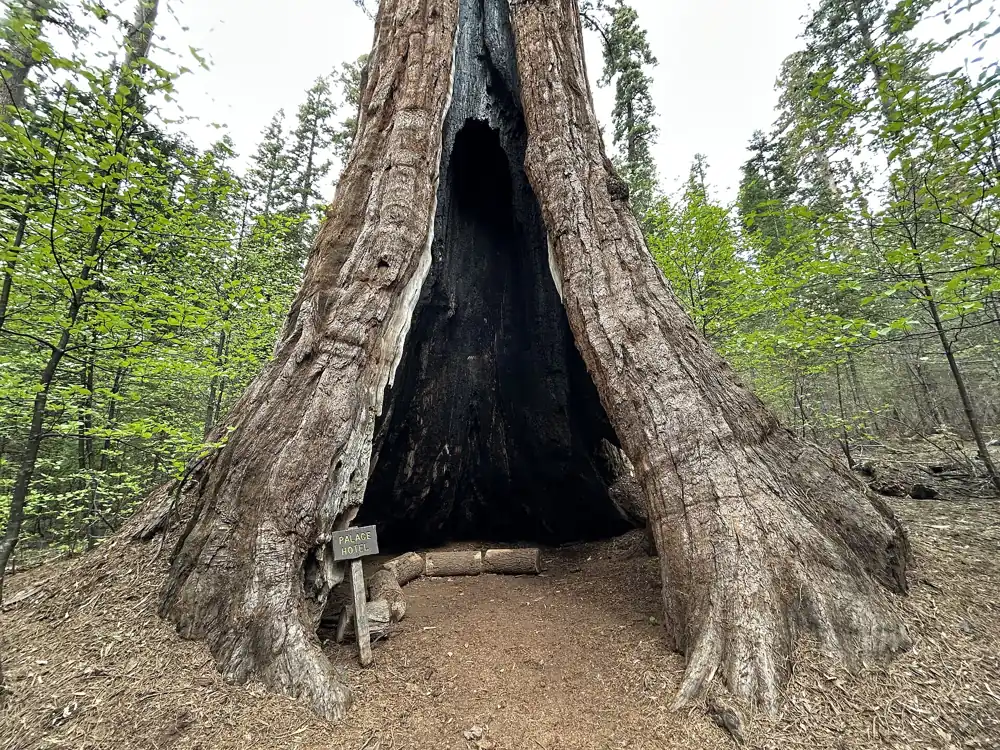
The North Grove at Calaveras was the first grove of giant sequoias known to the outside world, found in 1852, and it made the big trees famous. The Discovery Tree was cut down the next year and its stump used as a dance floor, a spectacle that helped turn Americans toward protecting such places at all.
The South Grove holds about a thousand more big trees in a wild canyon. This is where the American conscience about giant sequoias began, and it belongs among the National Parks it inspired.
The history of National Park Campaigns
Bills to bring the Calaveras groves into the park system went to Congress in 1907 and 1908, followed by a campaign to buy the land through private donations. The Park Service found acquisition not feasible, and the state stepped in, creating Calaveras Big Trees State Park in 1931 and later adding the South Grove.
- Distinct National Park attempts
- 2+ (1907 and 1908 bills; later donation campaign)
- Other designation attempts
- 1 (1931 state park)
Sources
- Lary M. Dilsaver, "Not of National Significance: Failed National Park Proposals in California," California History 85:2 (2008)
- Wikipedia, List of proposed National Parks of the United States
- 1852
Augustus T. Dowd comes upon the North Grove.
- 1853
The Discovery Tree is felled; its stump becomes a dance floor.
- 1907–1908
Bills are introduced to bring the groves into the park system.
- 1931
Calaveras Big Trees State Park is established around the North Grove.
- 1941
Federal acquisition is weighed again and found not feasible.
- 1954
The South Grove campaign culminates in its addition to the state park.