- Location
- California
- Current protection
- Indian Canyons (Agua Caliente Band of Cahuilla Indians); Santa Rosa and San Jacinto Mountains National Monument
- Status
- No active campaign; tribal land
- Tier
- Tier 3 · Smaller national site
- In the book
- Not featured in Undiscovered America
Why should it be a National Park?
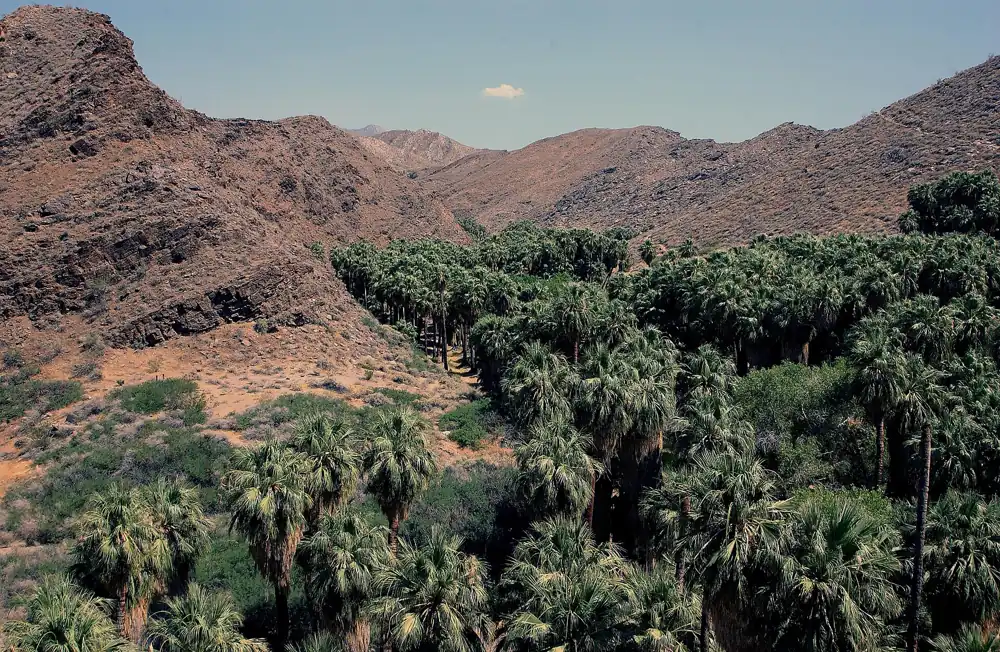
Palm Canyon holds the largest grove of California fan palms in the world, a green ribbon of native palms running for miles through a desert canyon just south of Palm Springs. The canyons around it hold streams, waterfalls, rock art, and the homeland of the Agua Caliente Band of Cahuilla Indians.
Congress actually authorized a National Park here in 1922. It was never carried out, because it had been drawn up around tribal land without the tribe's consent. Today the Agua Caliente run the Indian Canyons themselves, and that is the model for a Palm Canyon National Park: a tribal park, recognized as the equal of any other.
The history of National Park Campaigns
Palm Canyon has been proposed for federal protection since 1908, when a Tahquitz Peak and Palm Canyon National Monument was suggested. A National Park bill reached Congress in 1920 and failed because the Agua Caliente Band had not been consulted about a park centered on its land; Congress authorized a park in 1922 that was never carried out. The canyons now lie within the Santa Rosa and San Jacinto Mountains National Monument, created in 2000, which the tribe co-manages.
- Distinct National Park attempts
- 3+ (1920 bill; 1922 authorization; revivals through 1962)
- Other designation attempts
- 2 (1908 monument idea; 2000 national monument)
Sources
- Allan Muth, testimony before the House Committee on Resources (2000)
- Lary M. Dilsaver, "Not of National Significance: Failed National Park Proposals in California," California History 85:2 (2008)
- Wikipedia, List of proposed National Parks of the United States
- 1908
A Tahquitz Peak and Palm Canyon National Monument is first suggested.
- 1920
A National Park bill fails; the Agua Caliente Band had not been consulted about a park on its land.
- 1922
Congress authorizes a park, but it is never carried out.
- 1933
A proposal for nearby Borrego Palm Canyon is rejected as not significant by comparison.
- 1937–1962
The park idea resurfaces in 1937, 1951, and 1962.
- 2000
Congress establishes the Santa Rosa and San Jacinto Mountains National Monument, which the tribe co-manages.